Place: Hørsholm, Denmark
Team: MASU Planning, Rambøll (Engineer), Novafos (Water management), Hørsholm Arboretum (Plants), SHP (contractor).
Client: Municipality of Hørsholm
Size: 50.000m2
Timeline: Completed 2024
PH Park
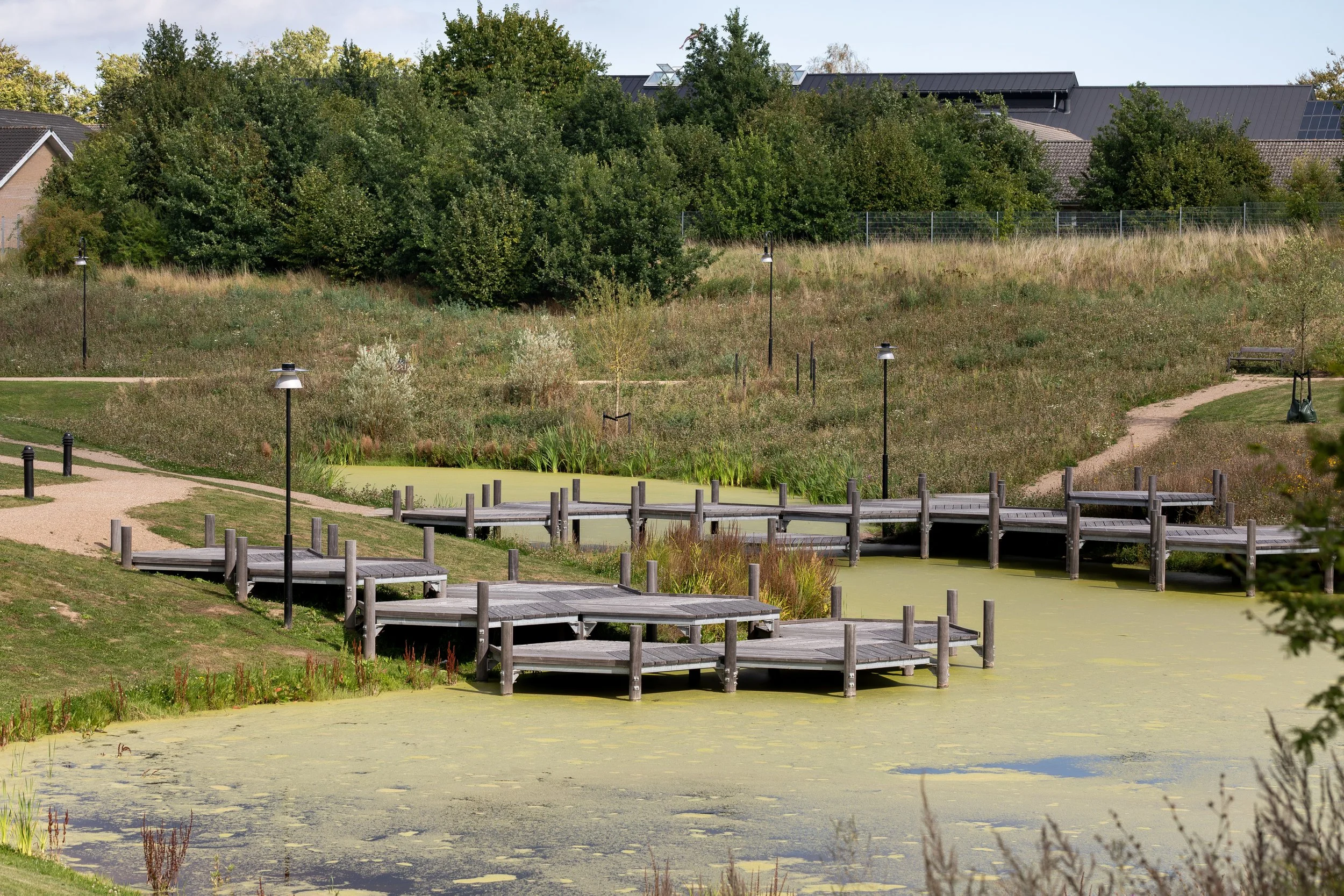
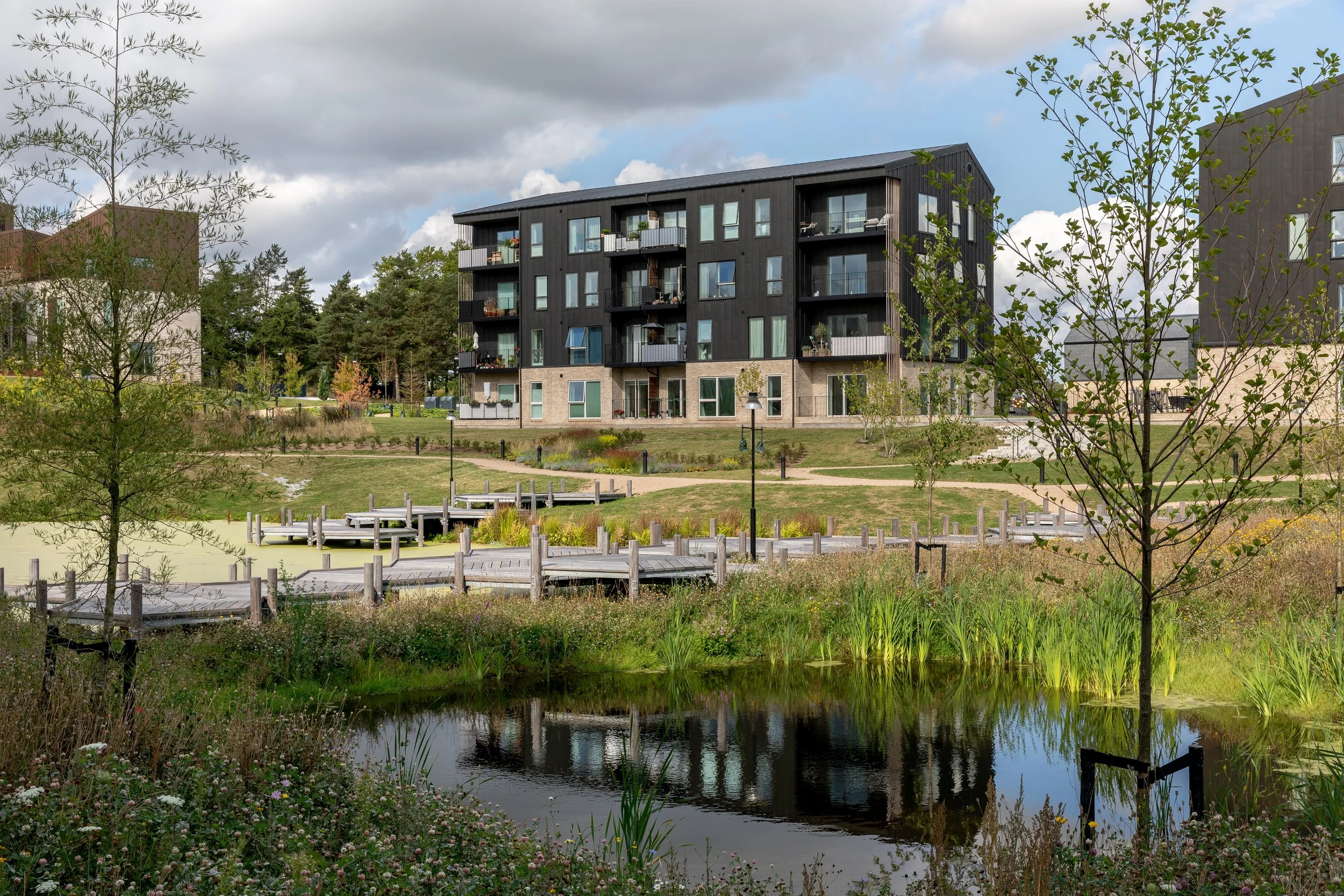
The hilly terrain, shaped during ice age, embraces a central lake, combining water management, a playful footbridge, leisure, and park experiences.
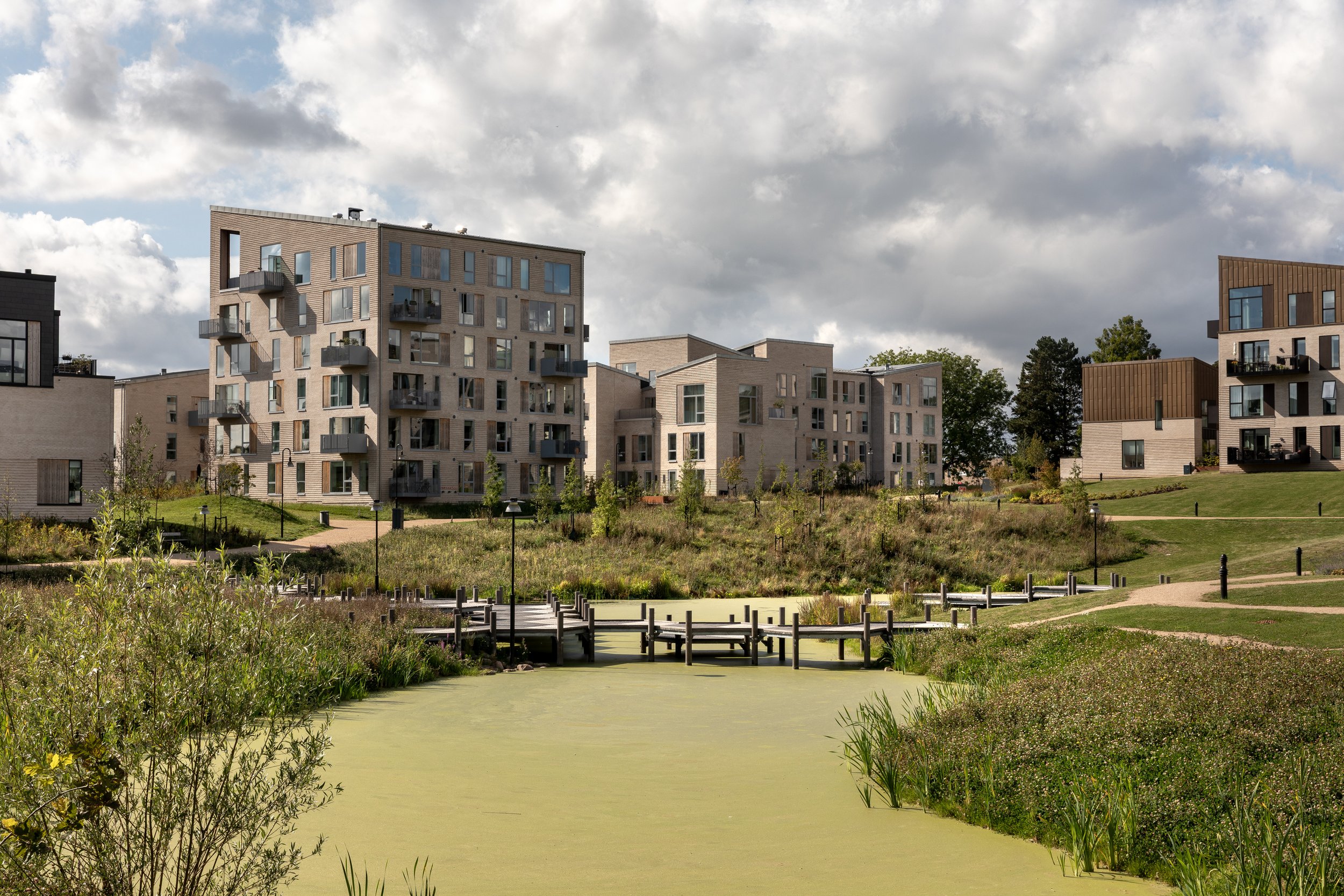
Situated on the former grounds of Usserød Hospital in Northern Zealand, PH Parken is a lush publicly accessible landscape. It consists of approximately 250 housing facilities clustered in an open, recreational lake landscape. The landscape is designed to support a variety of green spaces that create a lush and diverse environment.
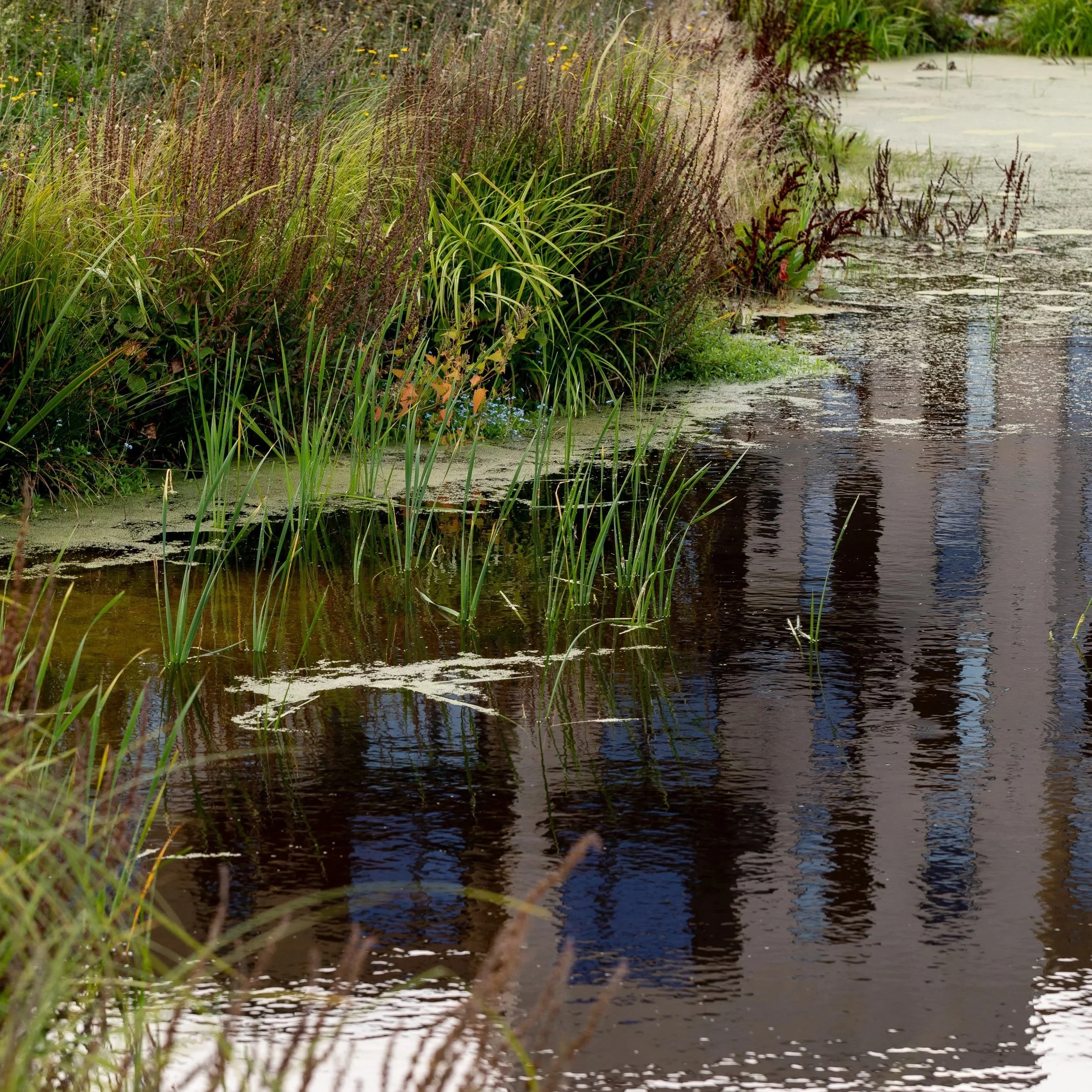
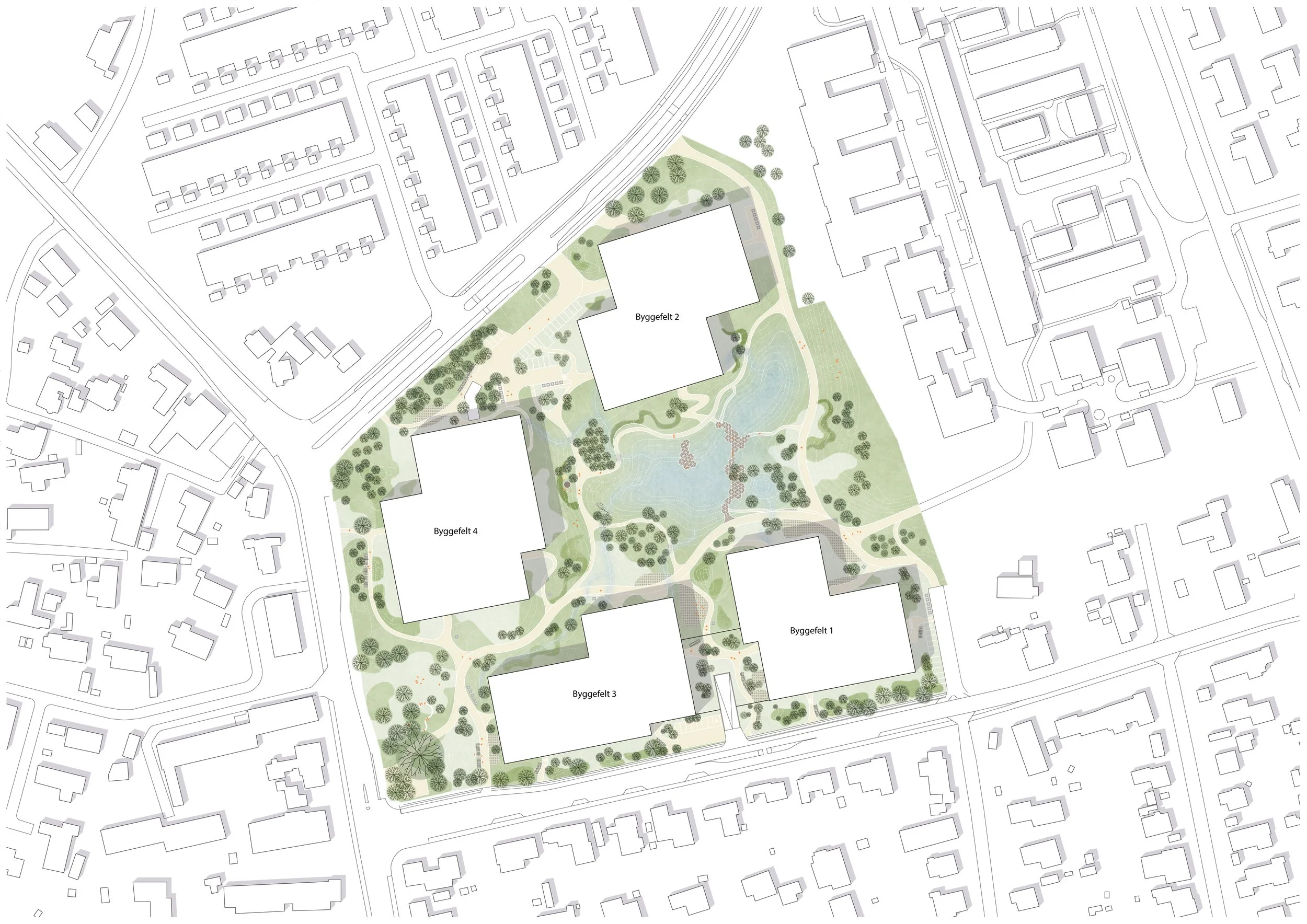
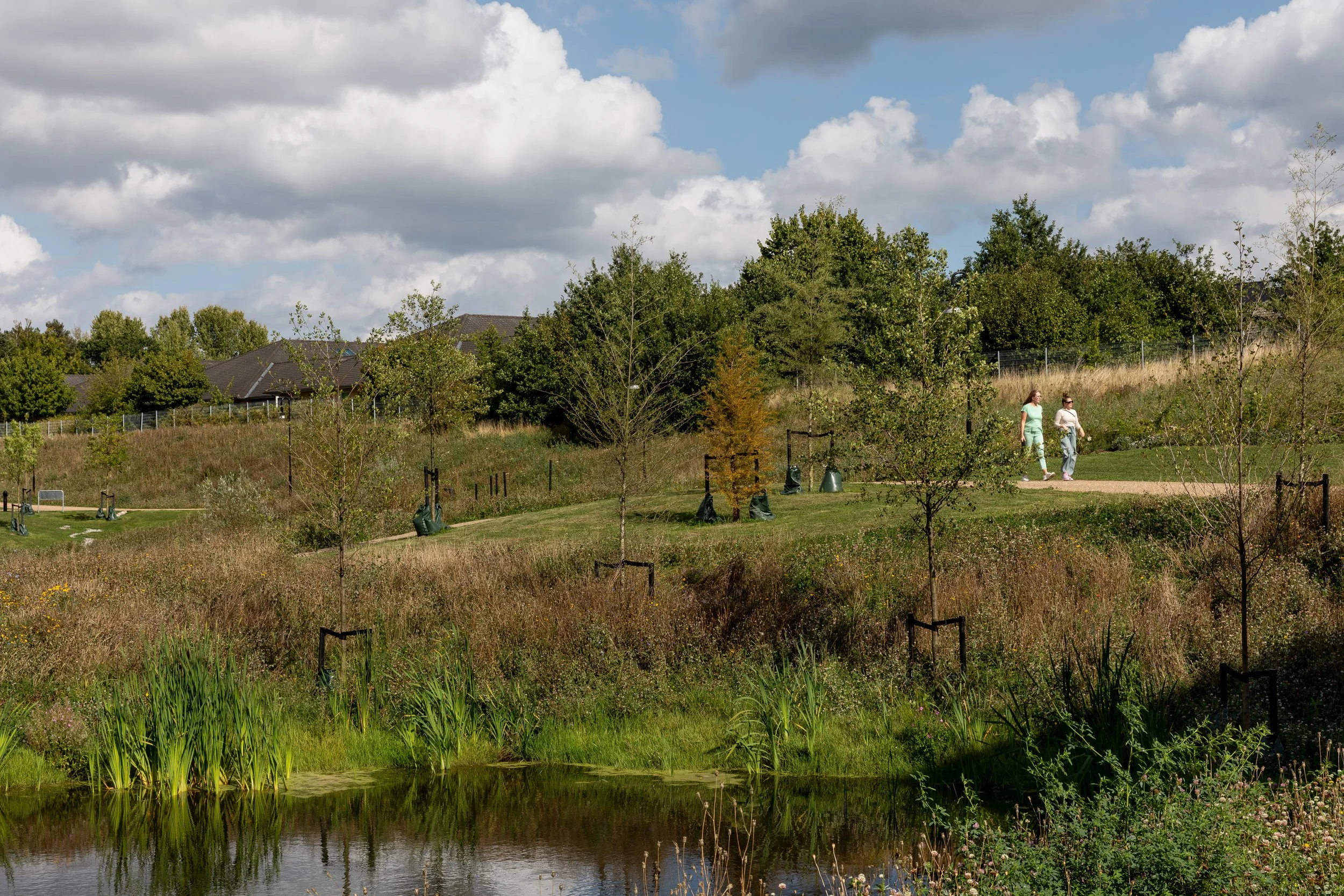
PH Parken places strong emphasis on creating species richness and increasing biodiversity in the area. In addition to preserving many old, existing trees, around 270 new trees of 50 different species have been planted.
Together with Hørsholm Arboretum, the team has selected a range of native species that attract birds and insects. Non-native species have also been chosen for their resilience to climate change. These include trees that can withstand drought or flooding, such as sweet chestnut and drought-tolerant walnut.
The project also includes a "climate adaptation lake," which protects the area from heavy rainfall and serves as a central recreational water feature in the park.
The lake in PH Parken helps delay stormwater runoff from both the buildings within PH Park and eventually from the surrounding areas, contributing to the municipality’s climate resilience.
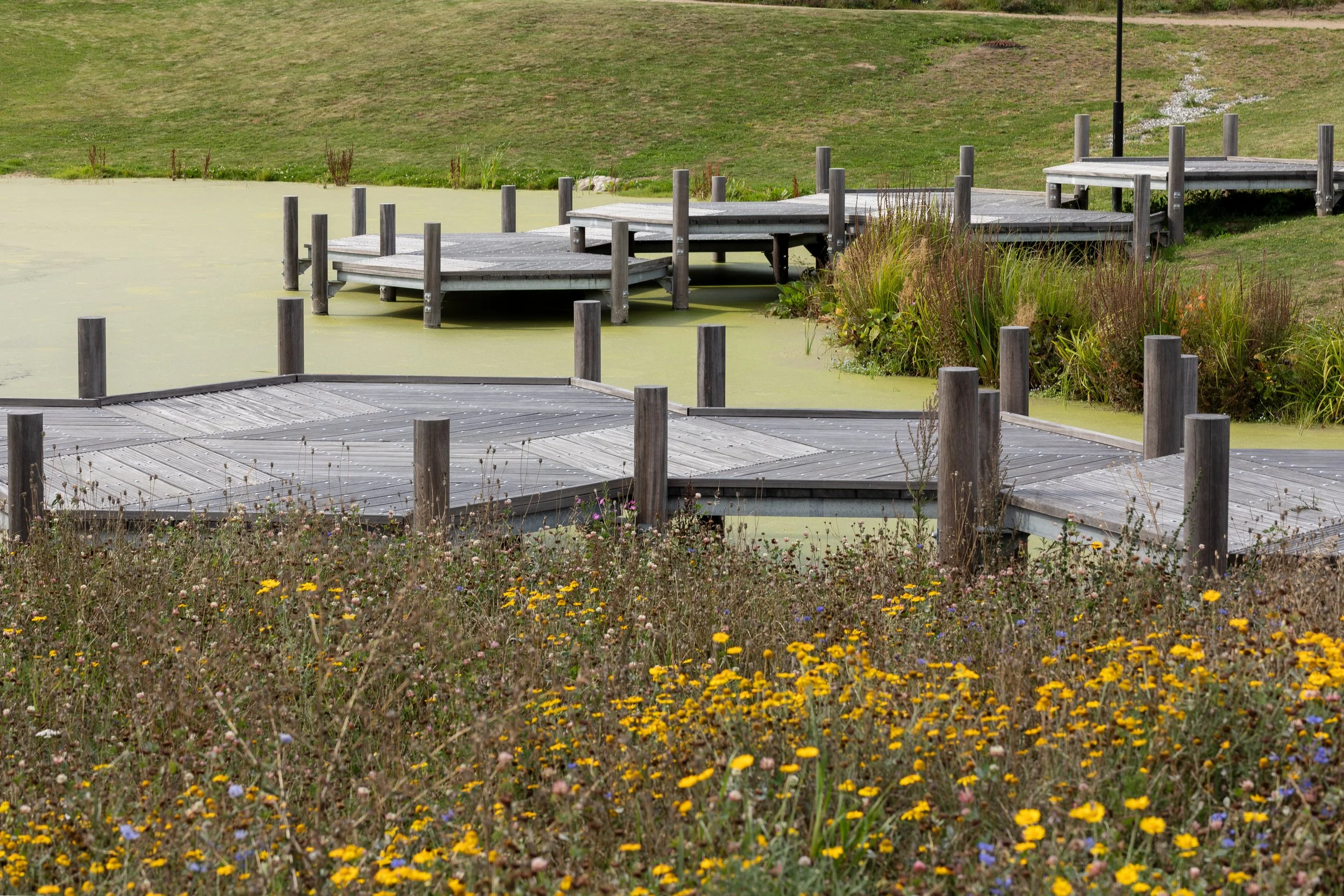
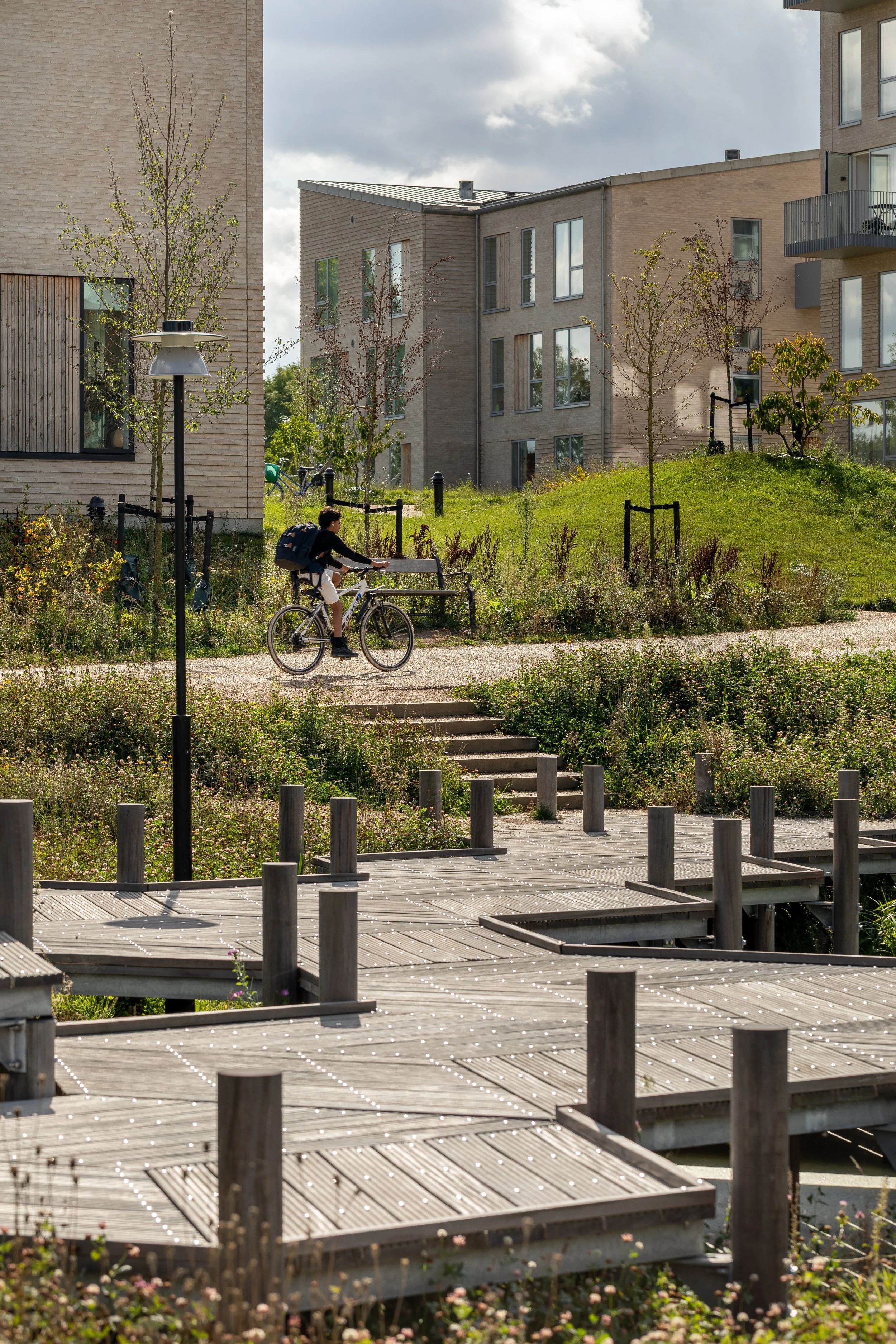
As part of the landscape’s pathway system, a custom-made walkway has been designed. From the walkway, visitors can the lake and observe how the water level changes with the weather.
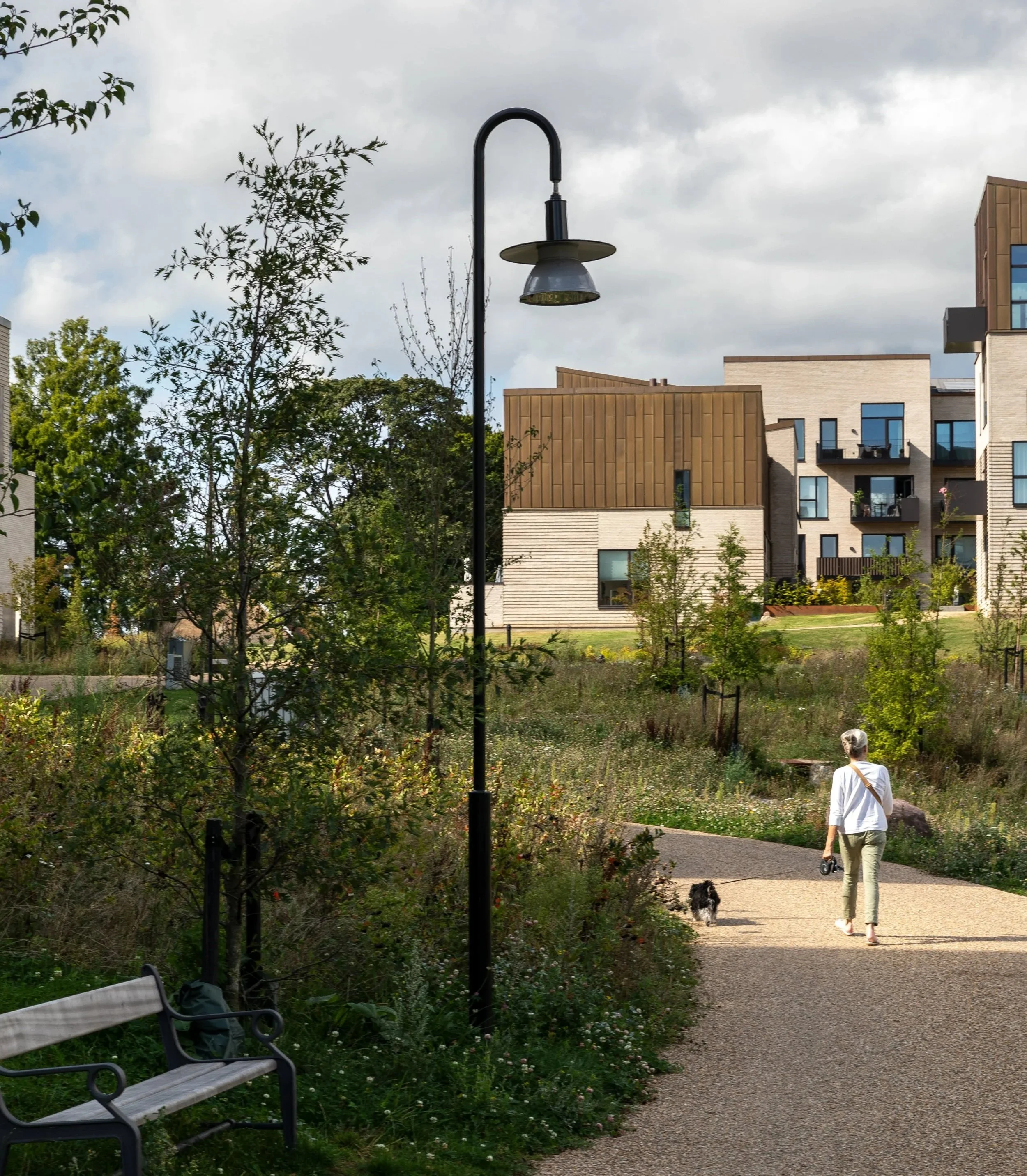
The combination of the lake landscape, urban park, numerous pathways, and plantings creates an adventurous, spontaneous, and enchanting landscape for citizens, residents, visitors, animals, birds, and insects.
The park is named after the Danish architect, playwright, film director, and more, Poul Henningsen, who lived 700 meters from PH Park from 1948 until his death in 1967. The lighting strategy along the pathways is inspired by his world-famous lamps.