Place: Helsinki, Finland
Team: MASU Planning, Schauman Nordgren Architects, WSP Finland
Client: HGR Property Partners
Size: 35.000m2
Timeline: 1st prize in competition, 2020 / Zoning plan 2024
Hietalahdenranta
Reconnecting city and waterfront, transforming a traffic-dominated edge into a vibrant urban destination.
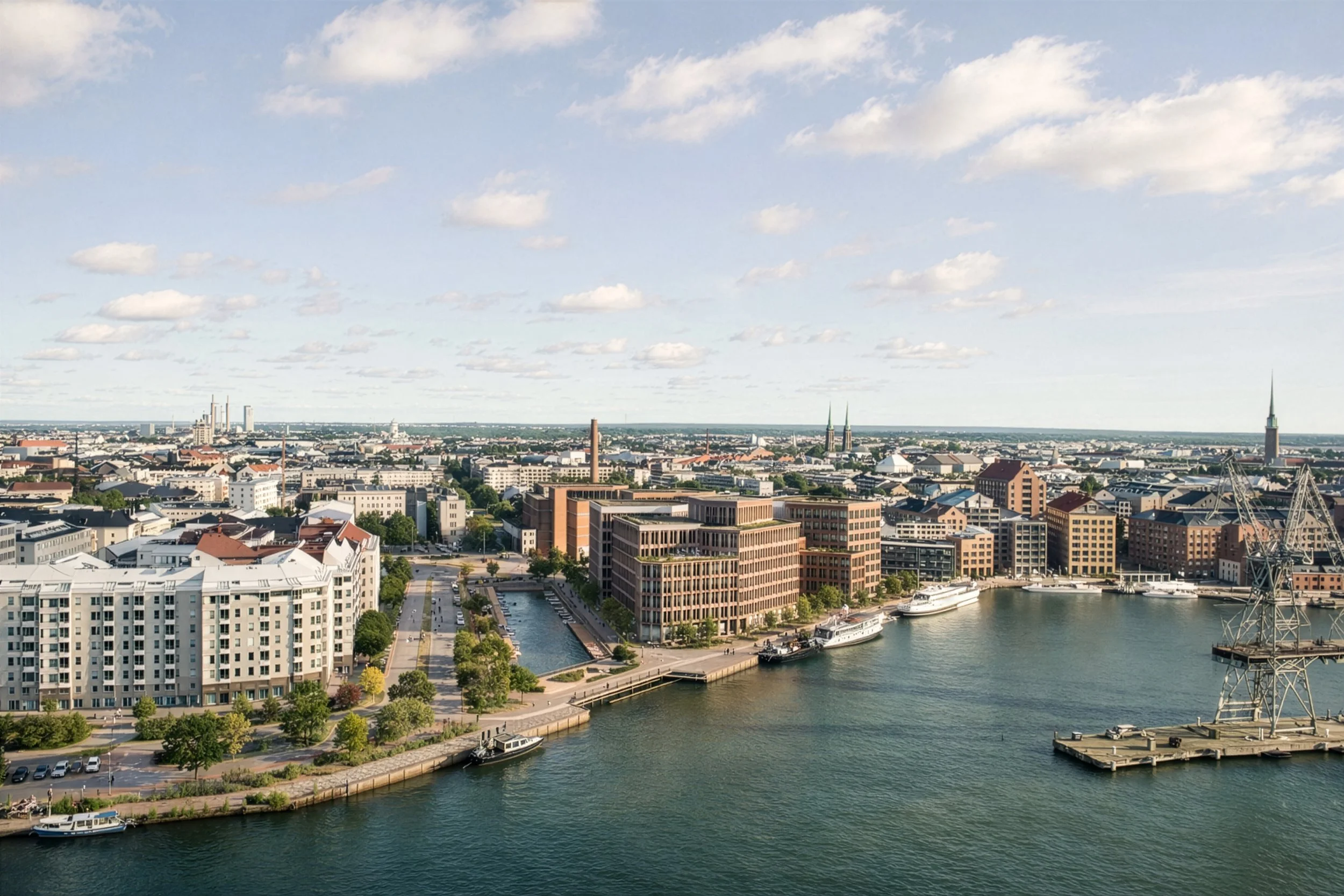
The project reimagines Hietalahdenranta as a cohesive and attractive part of central Helsinki, where public space, mobility, and urban life are carefully integrated. By restructuring traffic, strengthening connections, and introducing new programs, the proposal transforms a fragmented area into a lively waterfront environment that supports recreation, business, and everyday life.
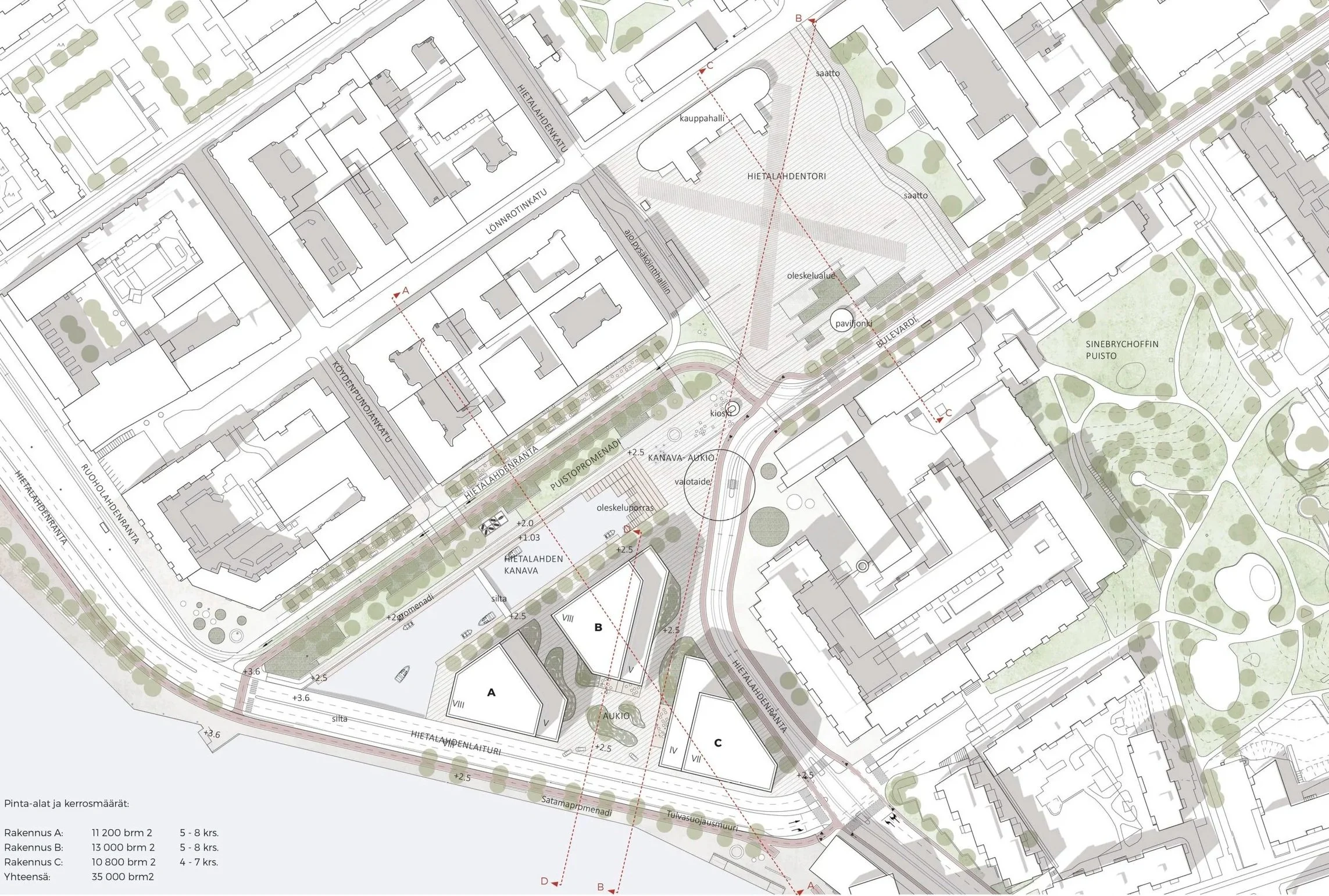
A New Urban Destination at the End of Bulevardi
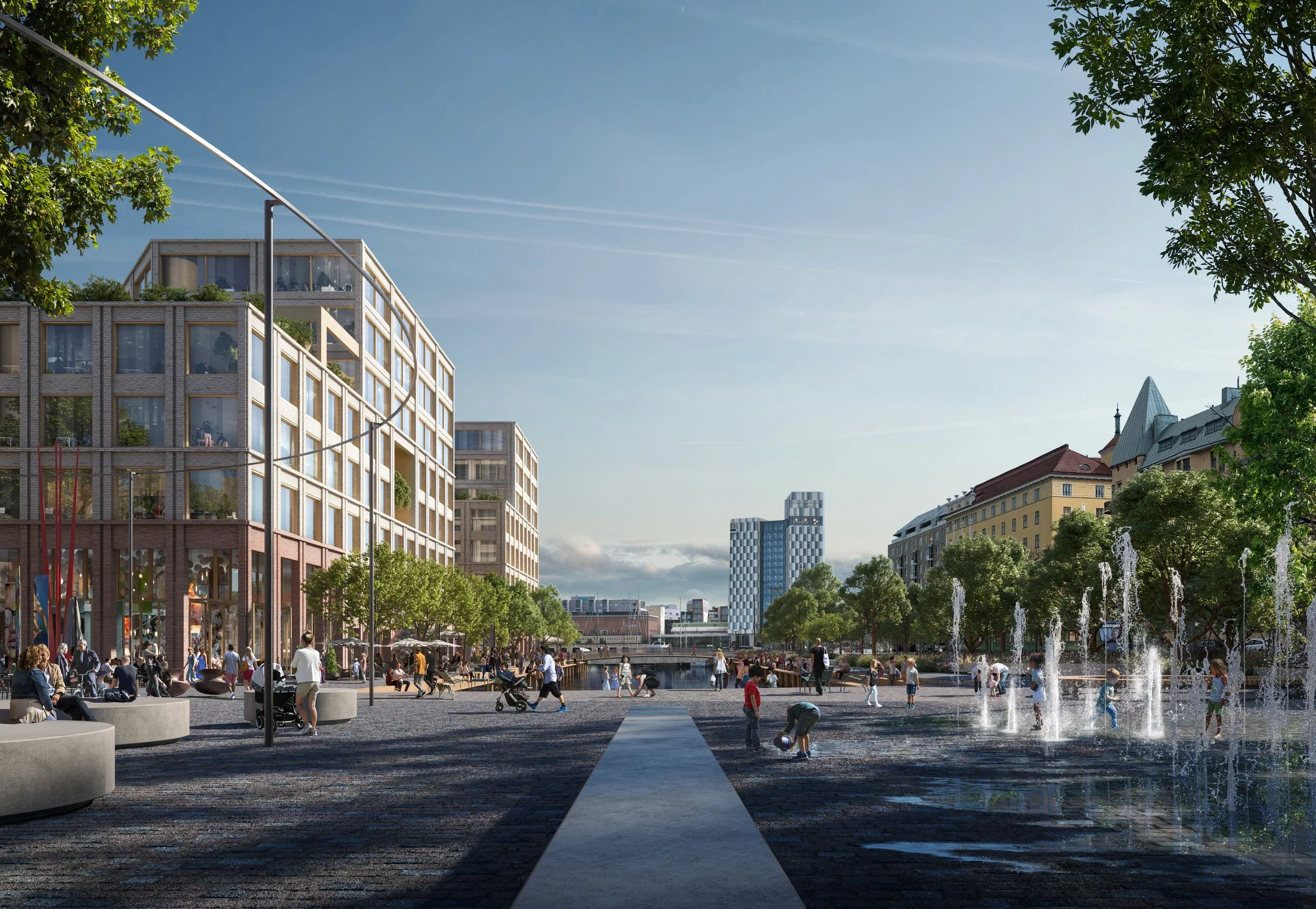
The plan positions Hietalahdenranta as a key extension of the city centre, connecting Hietalahti Market Square, the end of Bulevardi, and the harbourfront into a unified and high-quality urban environment. The ambition is to restore the area as an attractive destination that draws people towards the water.
From Traffic Junction to Urban Space
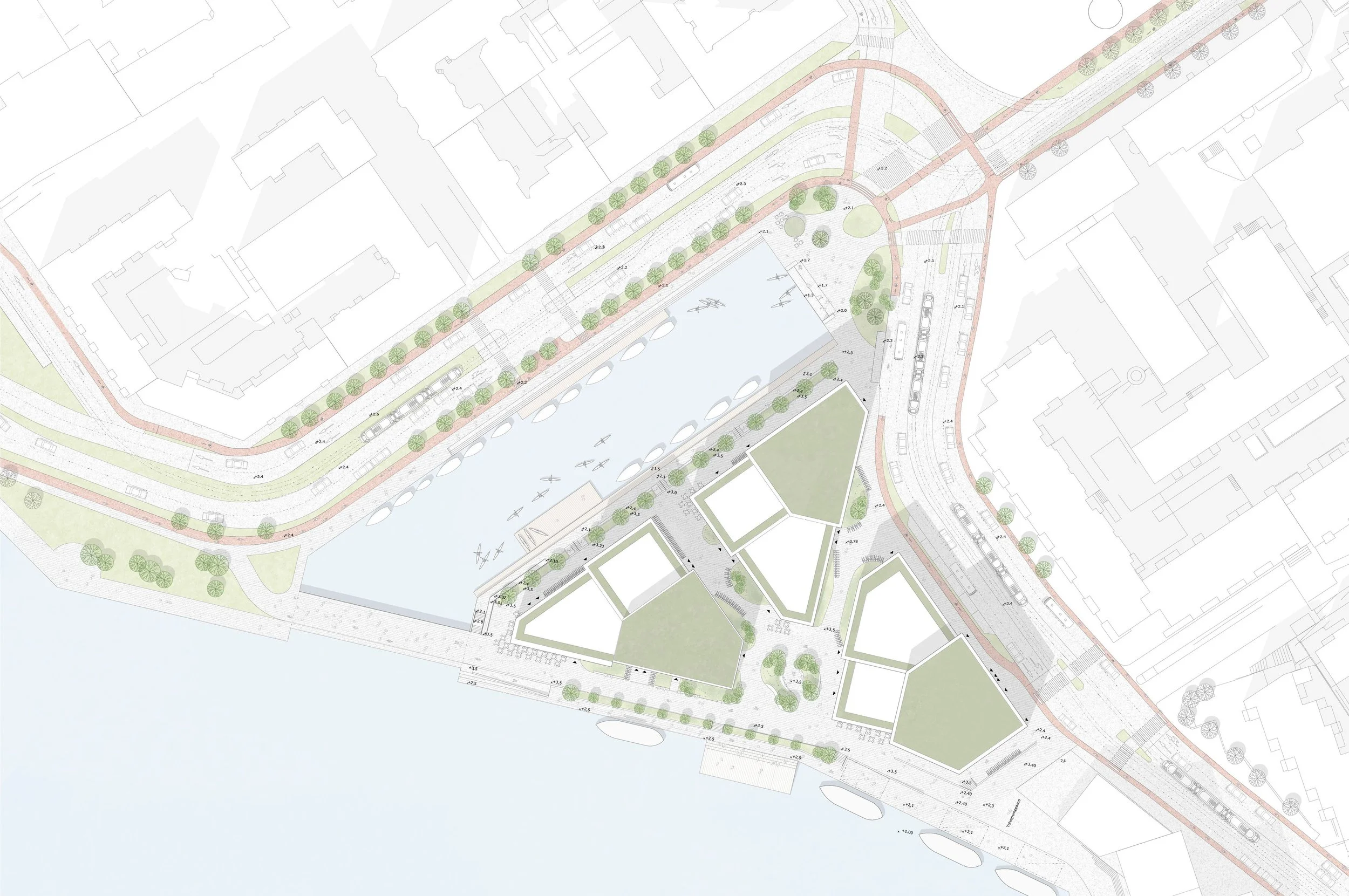
A central move in the project is the reorganization of traffic infrastructure. By reducing the barrier effect of traffic and relocating key flows, the former road-dominated intersection is transformed into a new urban space that links the boulevard directly to the waterfront and surrounding public areas.
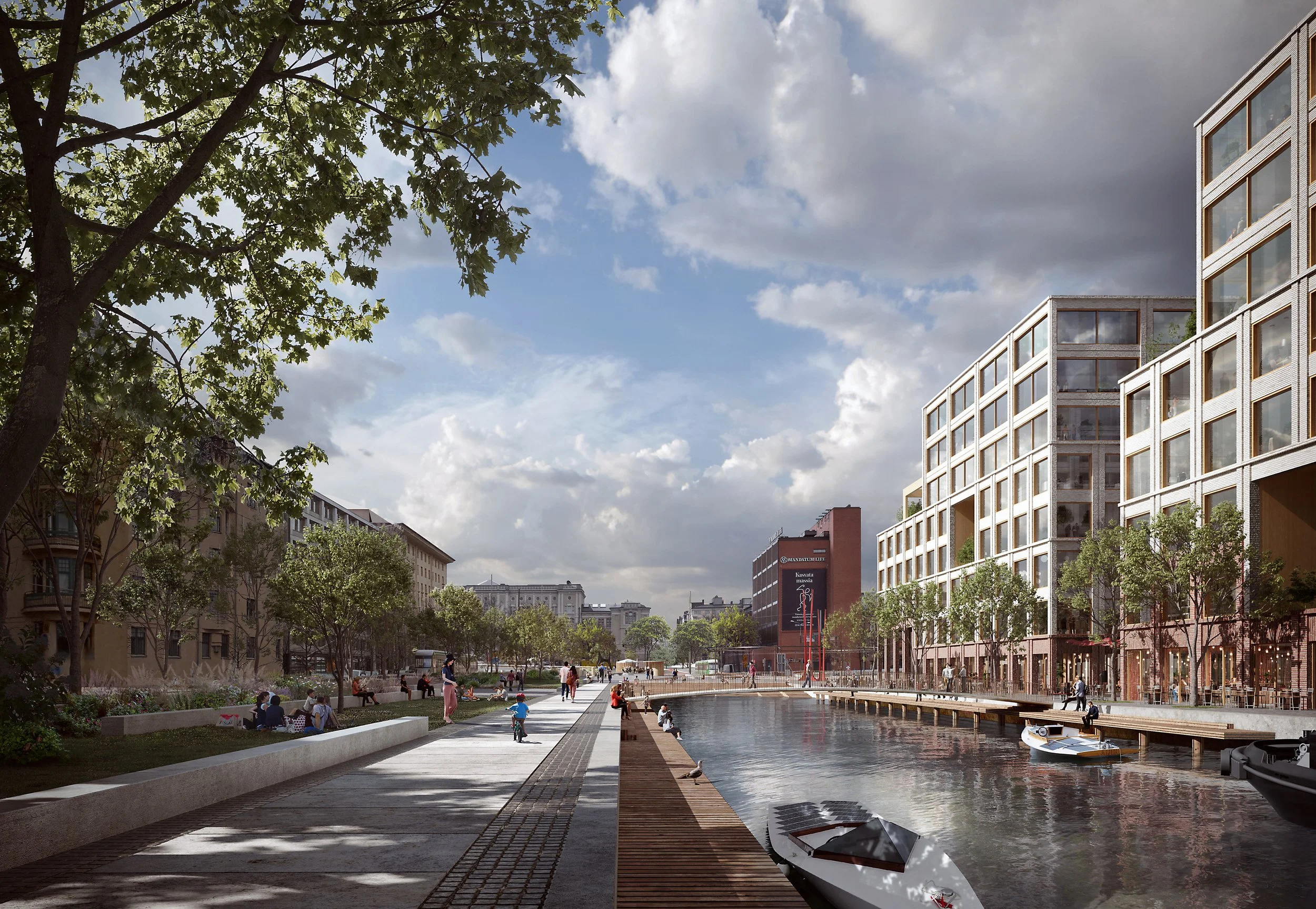
A New Waterfront Centre
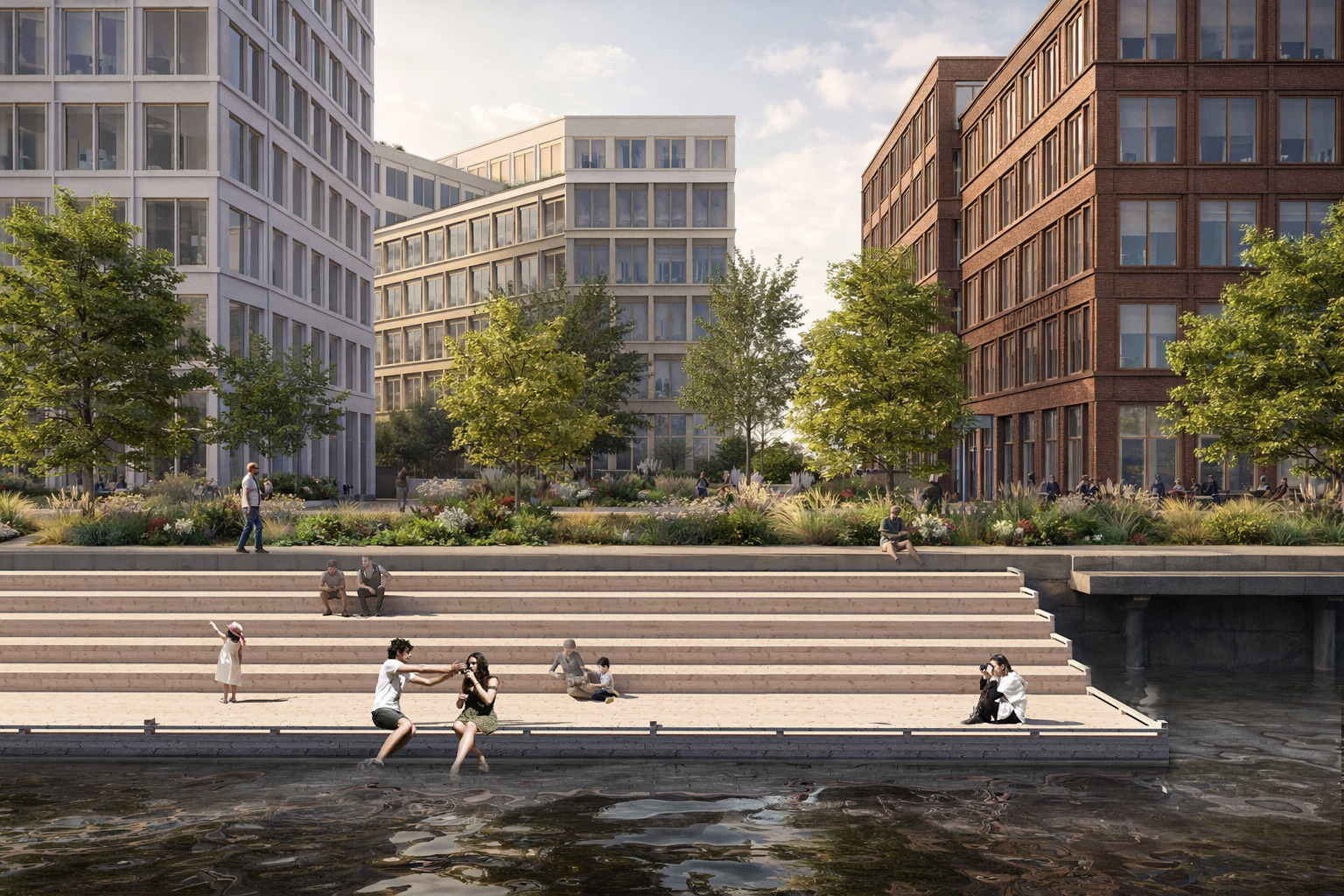
The proposal introduces a new canal edge — Kanavaranta — as a defining public space. This area becomes a year-round meeting place, supported by high-quality urban design and active edges that encourage social life and everyday use.
Connecting Functions and Urban Life
The vision brings together recreation, business, and housing within a cohesive framework. By diversifying functions and strengthening public space, the project creates a balanced and lively district that is not solely defined by transit, but by people and activity.
Improving Mobility and Public Space
Enhanced pedestrian and cycling connections, improved street conditions, and new public amenities support a more accessible and human-scaled environment. The project prioritizes movement through the city as an experience, linking key destinations while reinforcing the continuity of the waterfront.