Place: Hillerød, Denmark
Team: MASU Planning (Landscape architect), Elkiær + Ebberskov Arkitekter, PLH Arkitekter, OJ Rådgivende Ingeniører
Client: Propreco, Favrholm municipality
Size: 9.000m2
Timeline: 1st prize in competition, 2023 / Masterplan 2024
Favrholm Stadionkvarter
A new landscape for sport, urban life, nature and neighbourhood life takes shape into a continuous civic-landscape environment.
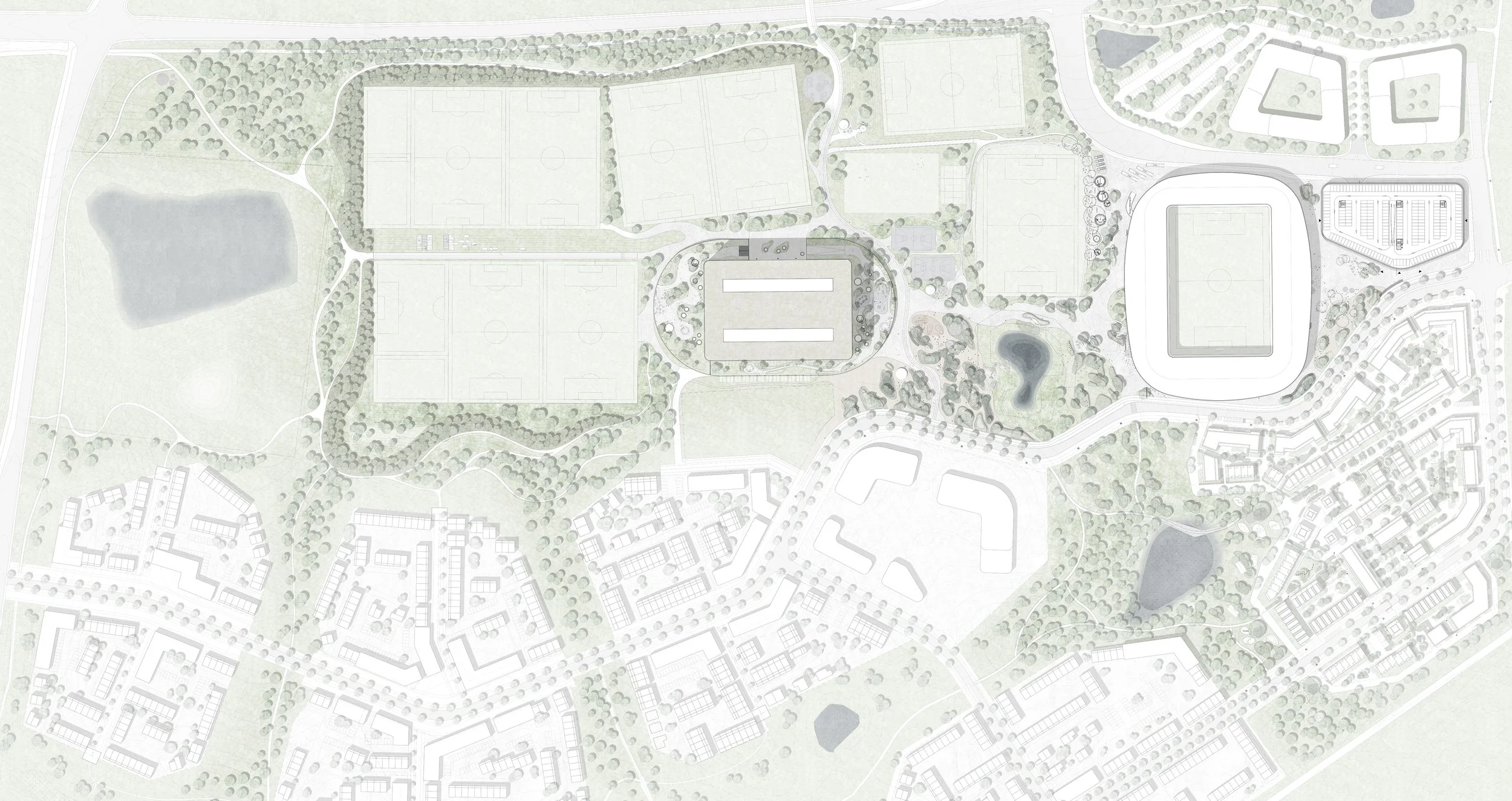
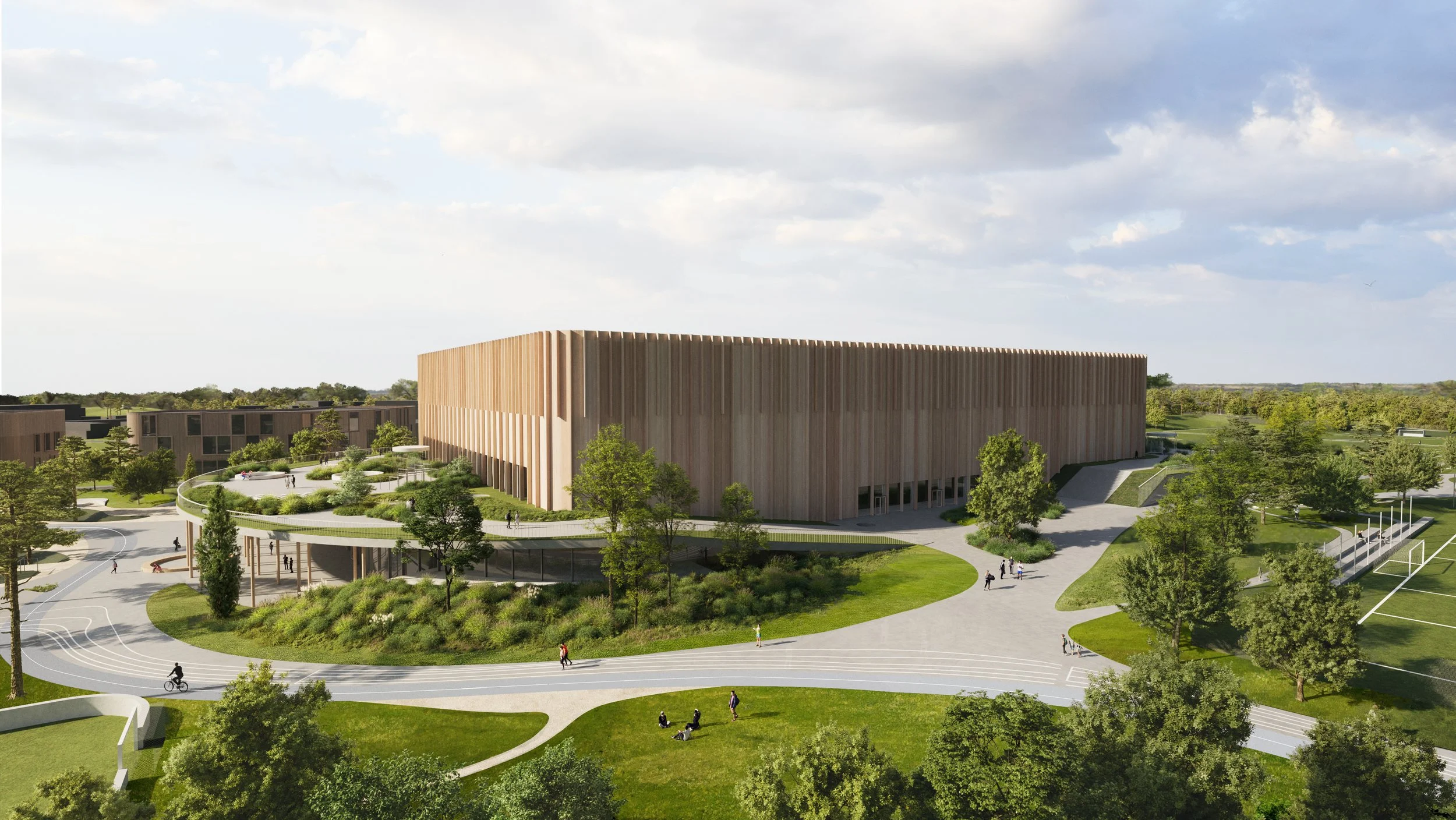
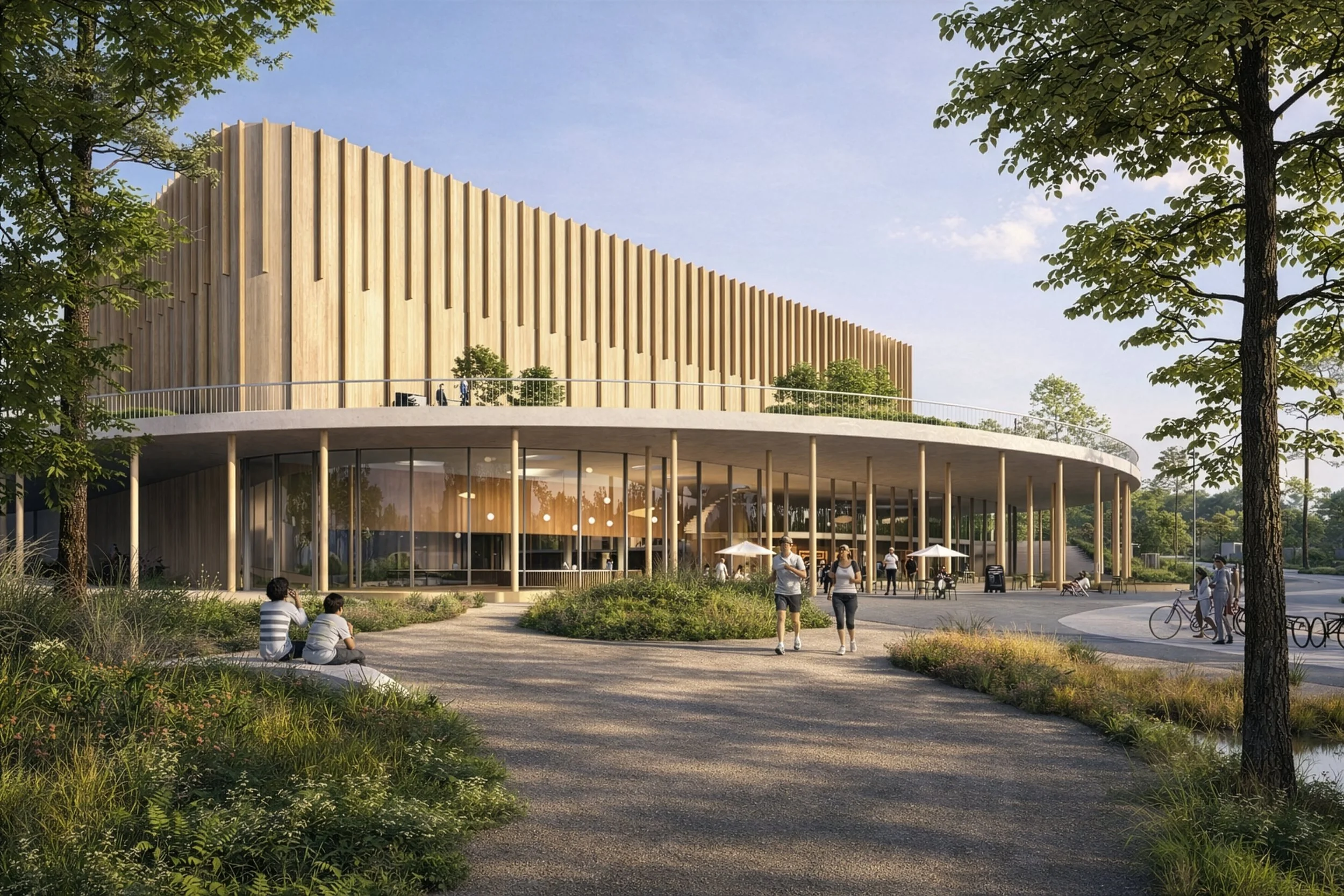
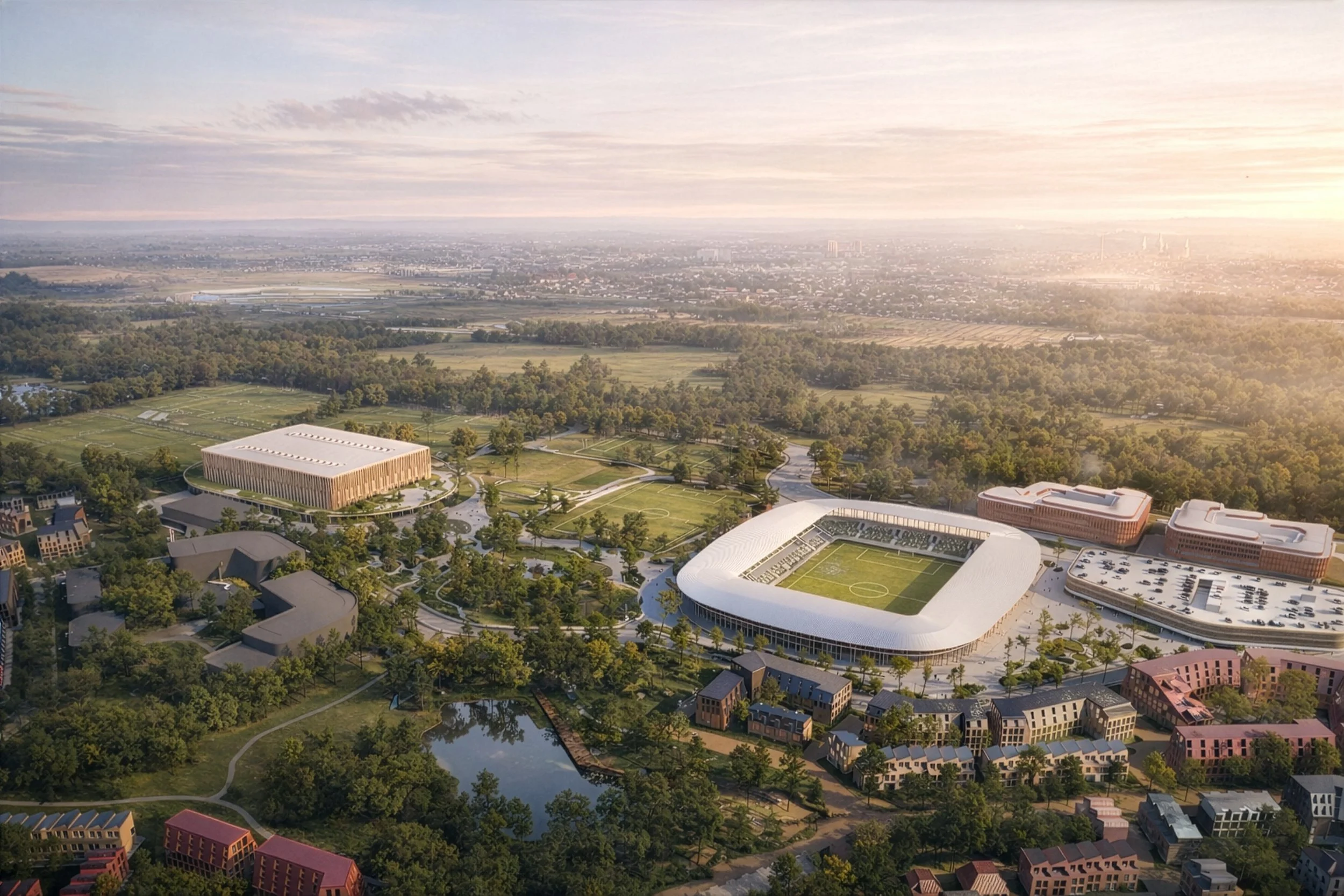
The Favrholm Stadionkvarter proposal reimagines a new district in Hillerød as an active and socially driven urban landscape built around sport, movement, and everyday life. Anchored by a new stadium and a wide range of recreational facilities, the project integrates housing, nature, and infrastructure into a cohesive whole, aiming to establish a pioneering model for future healthy neighbourhoods.
A New Urban District Built Around Sport and Life
Favrholm Stadionkvarter is conceived as a new neighbourhood south of Hillerød, combining large-scale sports facilities, residential areas, and public amenities. The development includes a stadium, football academy, sports fields, and supporting functions, creating a strong destination for both everyday use and major events.
A Landscape Shaped by Ice Age Topography
The design draws on the existing glacial landscape, using terrain differences, hills, and depressions as structuring elements for a new recreational environment. These natural forms are integrated with buildings and sports facilities, creating a varied and immersive landscape for movement and activity.
A Green and Climate-Adapted Framework
Climate adaptation is embedded in the masterplan through green areas designed to manage stormwater and support biodiversity. These landscapes function both as recreational spaces and as part of a larger environmental strategy for the new district.
A New Model for Future Neighbourhoods
Favrholm Stadionkvarter aims to become a pioneering example of how sport, housing, and landscape can be integrated into a socially and physically active district. The ambition is to create a place that supports health in all its forms — physical, mental, and social — through everyday movement and shared spaces.