Place: Hillerød, Denmark
Team: MASU Planning (Landscape architect), Elkiær + Ebberskov Arkitekter, PLH Arkitekter, OJ Rådgivende Ingeniører
Client: Propreco, Favrholm municipality
Size: 9,000 m2
Timeline: 1st prize in competition, 2023 / Masterplan 2024
Favrholm Stadionkvarter
A new landscape for sport, urban life, nature and neighbourhood life takes shape into a continuous civic-landscape environment.
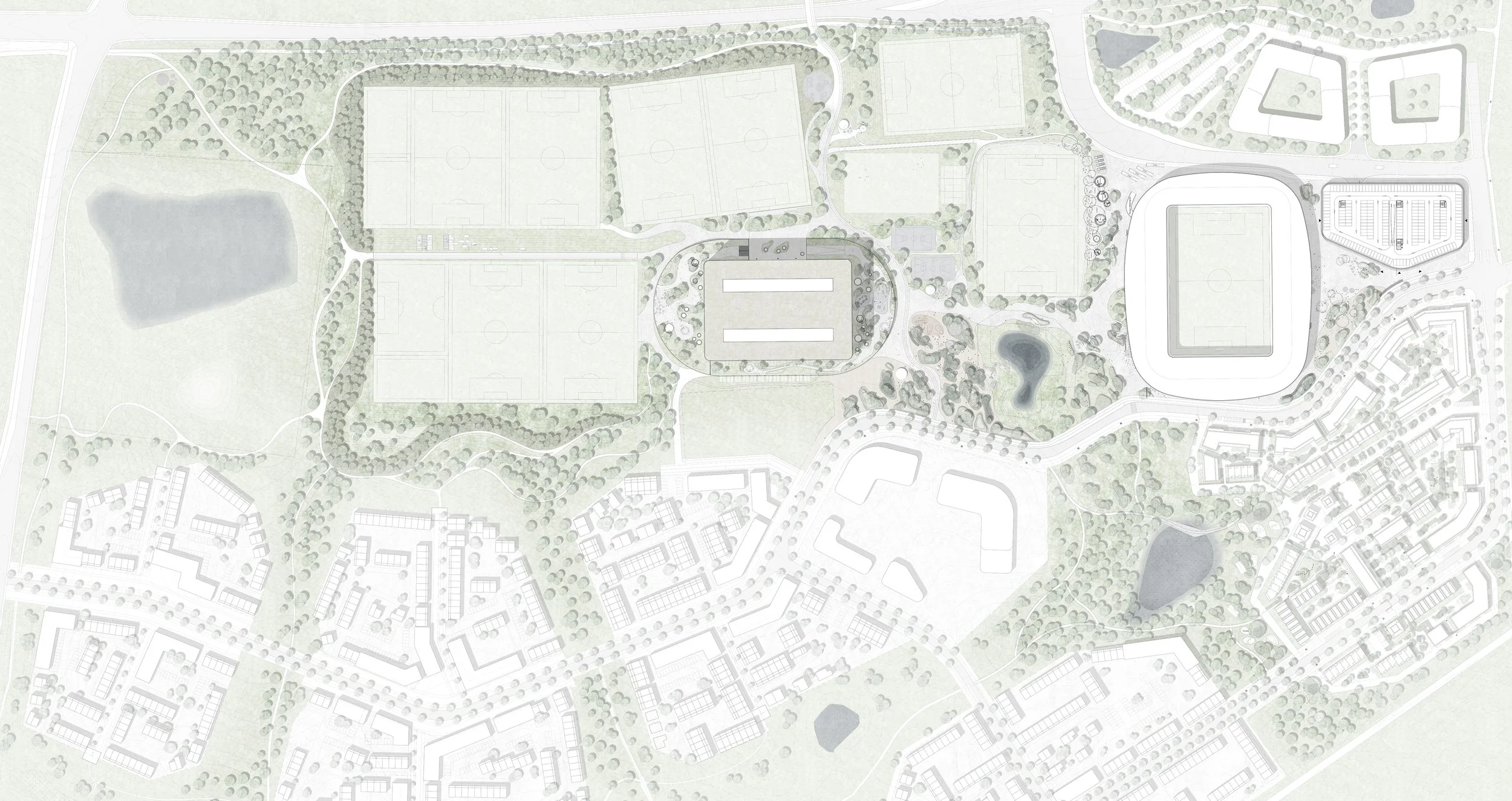
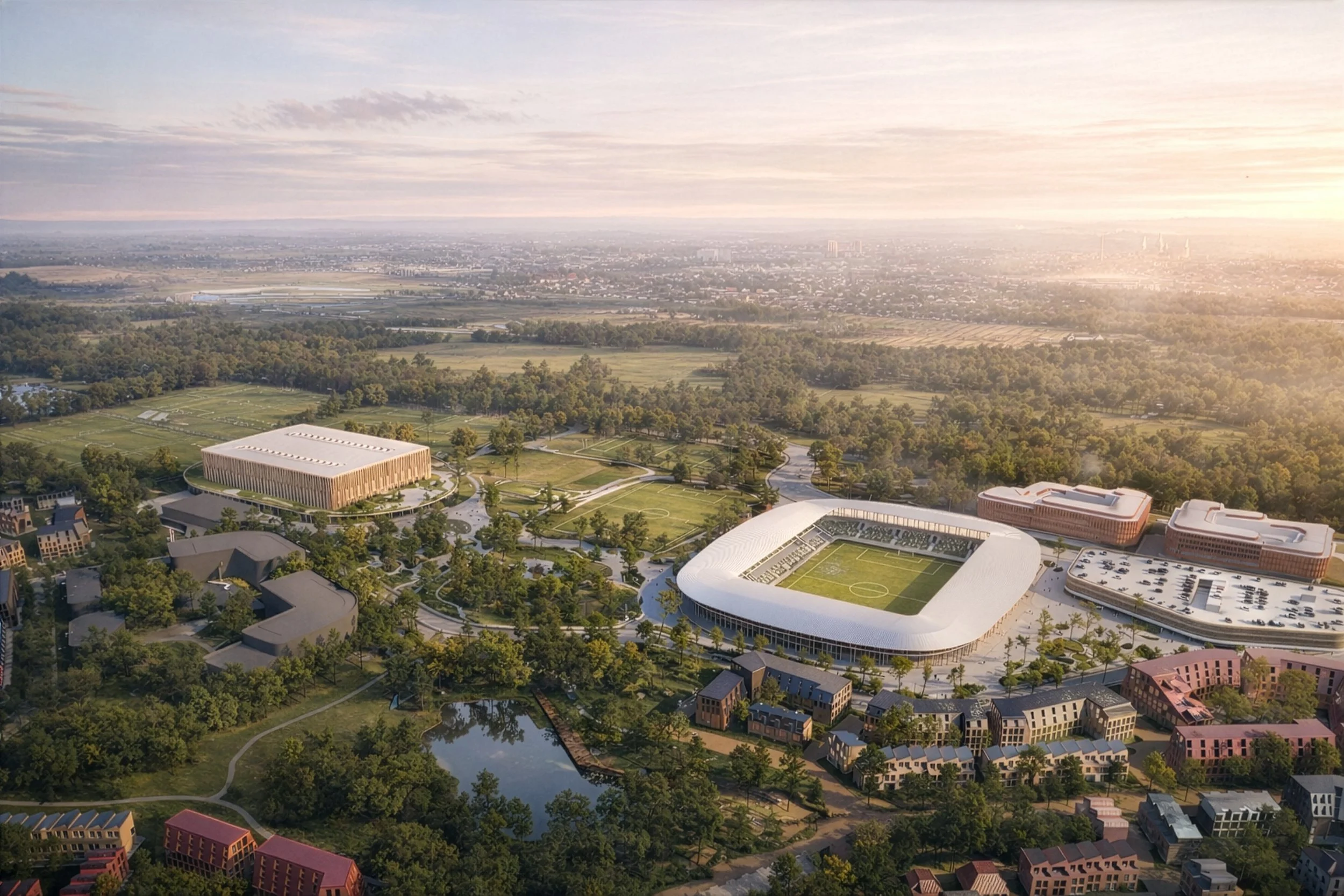
The Favrholm Stadionkvarter proposal reimagines a new district in Hillerød as an active and socially driven urban landscape built around sport, movement, and everyday life. Anchored by a new stadium and a wide range of recreational facilities, the project integrates housing, nature, and infrastructure into a cohesive whole, aiming to establish a pioneering model for future healthy neighbourhoods.
A New Urban District Built Around Sport and Life
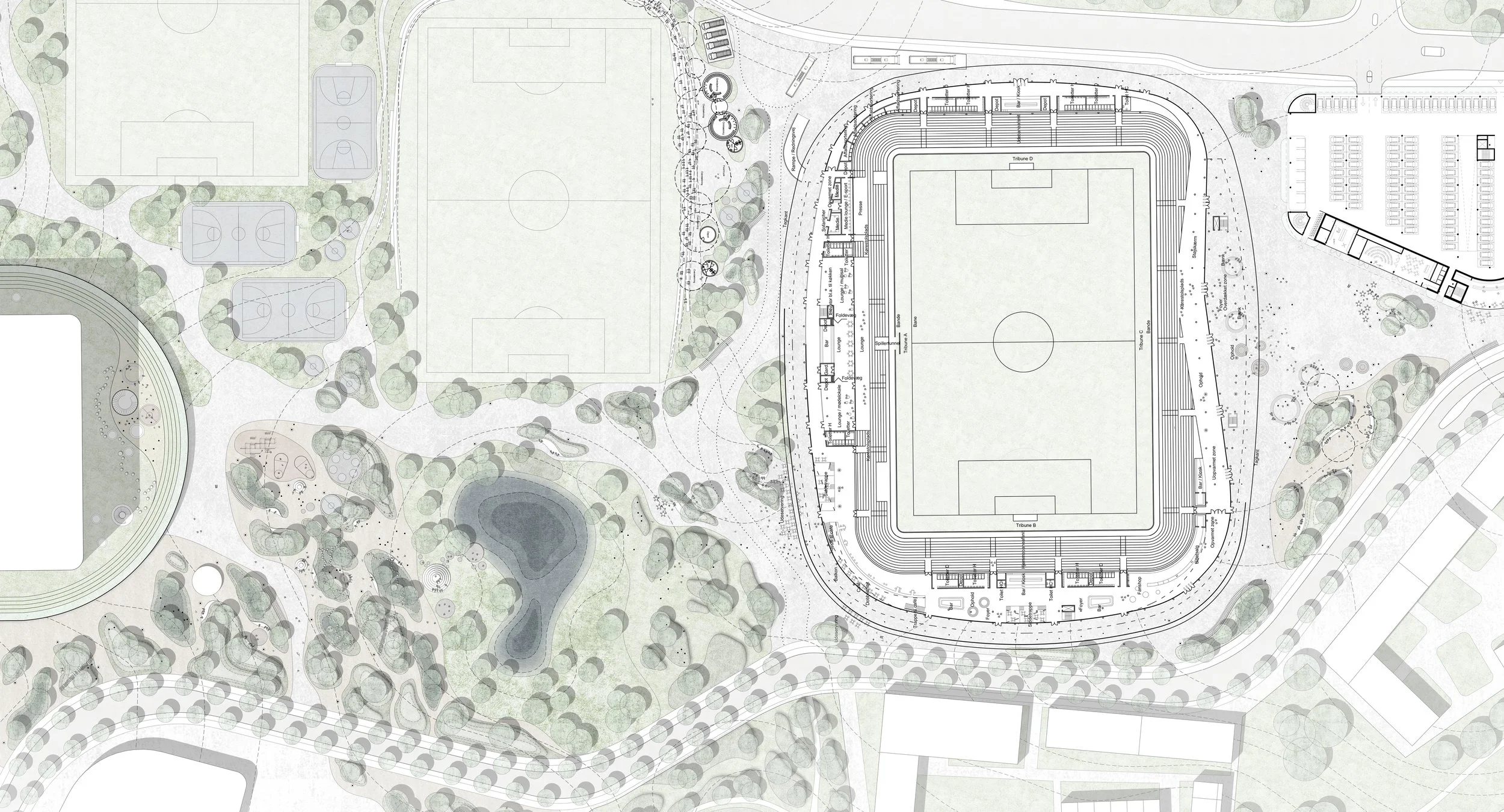
Favrholm Stadionkvarter is conceived as a new neighbourhood South of Hillerød, combining large-scale sports facilities, residential areas, and public amenities. The development includes a stadium, football academy, sports fields, and supporting functions, creating a strong destination for both everyday use and major events.
A Green and Climate-Adapted Framework
Climate adaptation is embedded in the masterplan through green areas designed to manage stormwater and support biodiversity. These landscapes function both as recreational spaces and as part of a larger environmental strategy for the new district.
A Landscape Shaped by Ice Age Topography
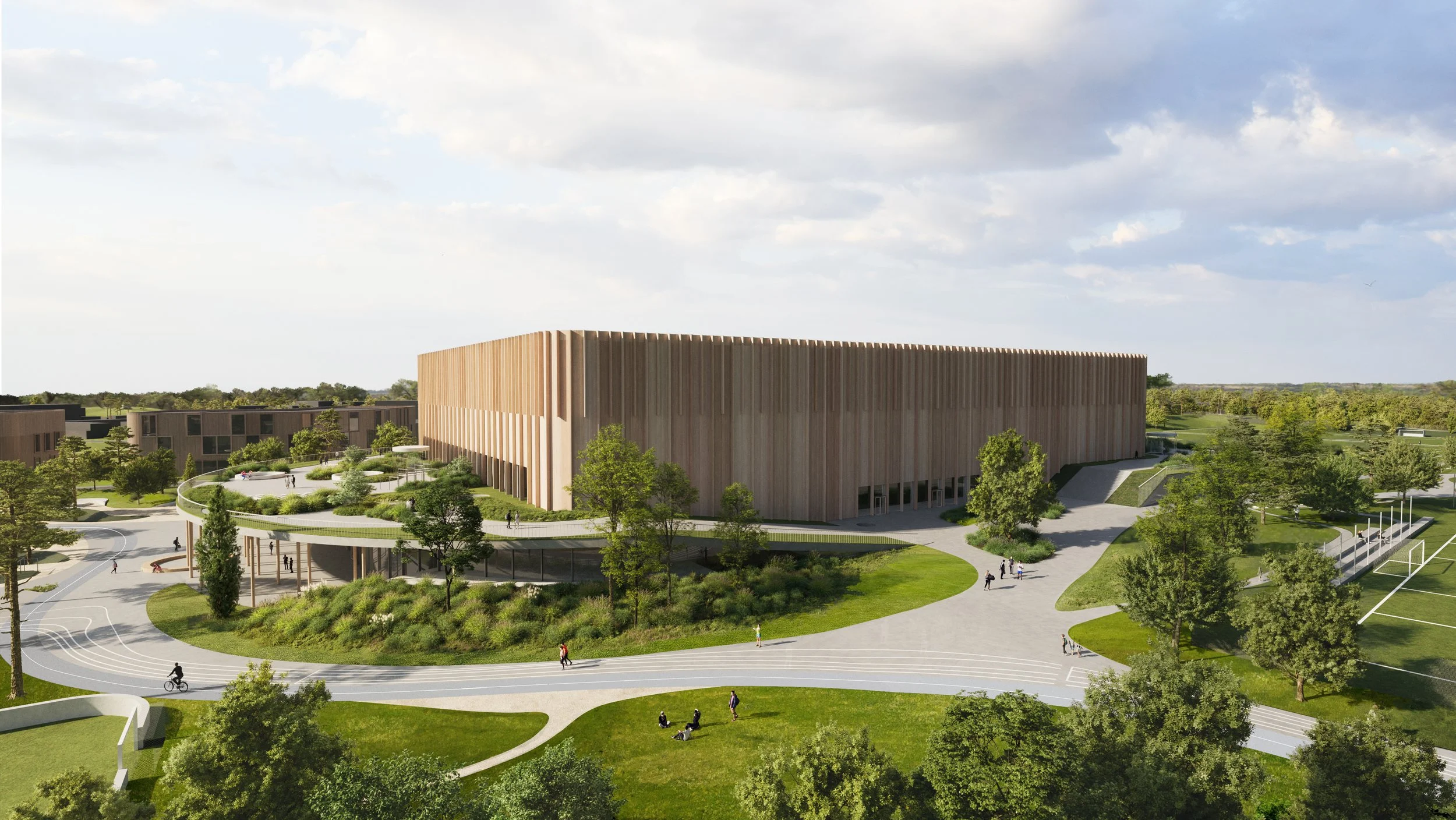
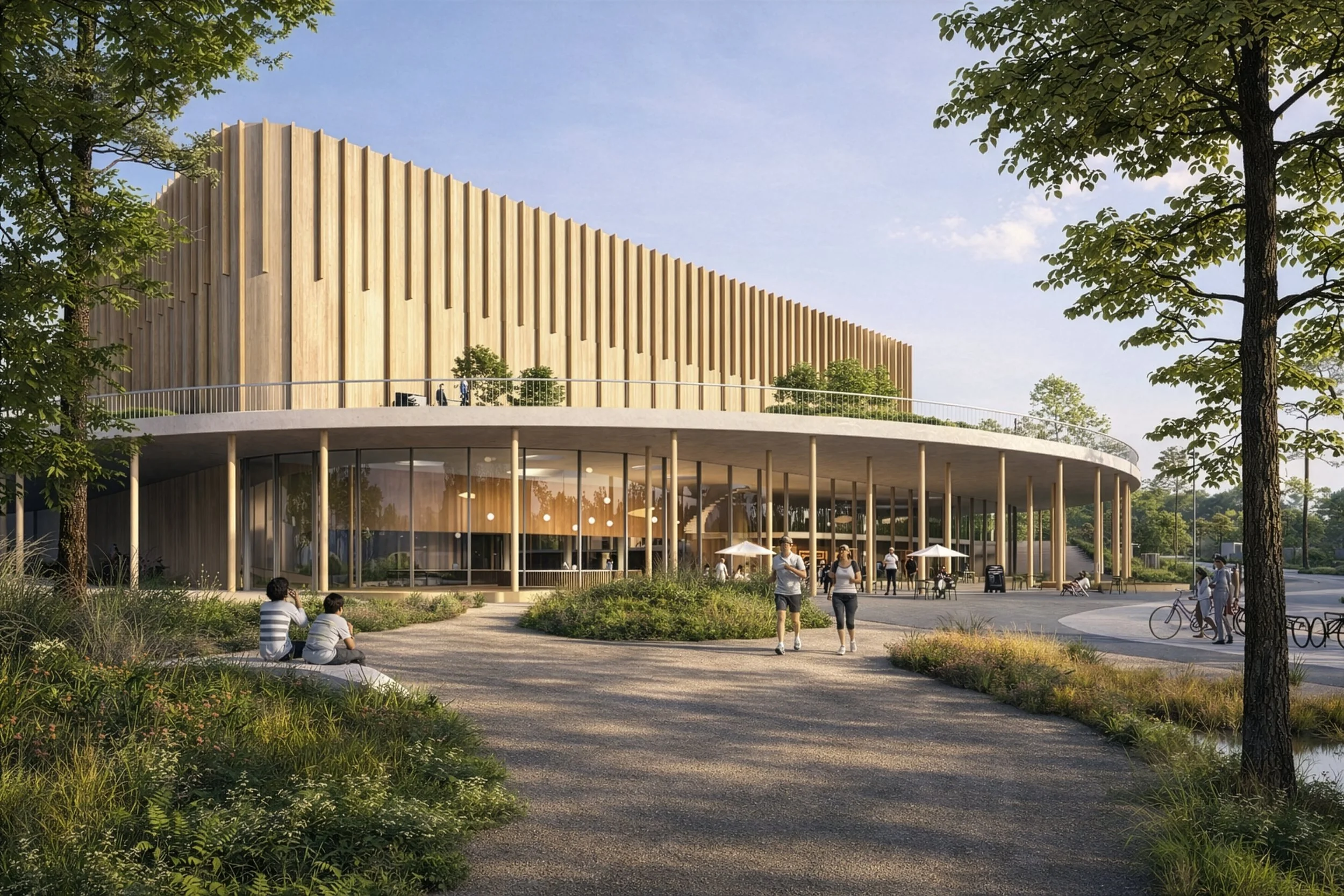
The design draws on the existing glacial landscape, using terrain differences, hills, and depressions as structuring elements for a new recreational environment. These natural forms are integrated with buildings and sports facilities, creating a varied and immersive landscape for movement and activity.
A New Model for Future Neighbourhoods
Favrholm Stadionkvarter aims to become a pioneering example of how sport, housing, and landscape can be integrated into a socially and physically active district. The ambition is to create a place that supports health in all its forms — physical, mental, and social — through everyday movement and shared spaces.
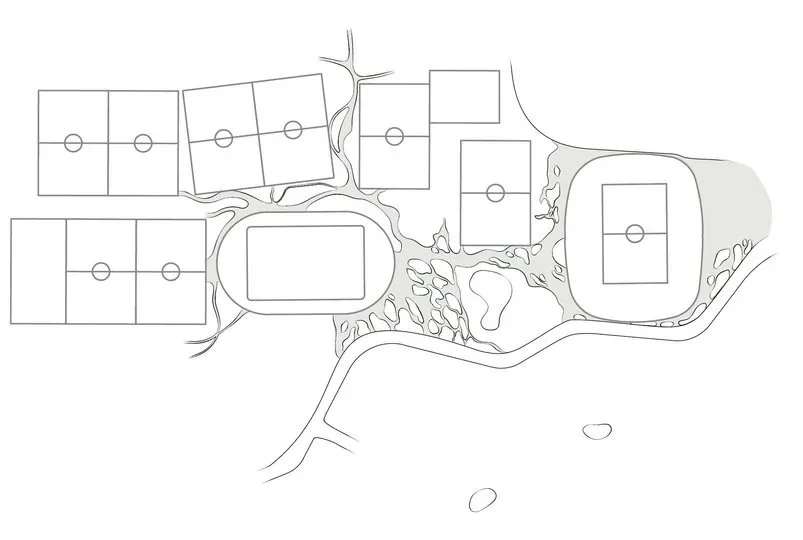
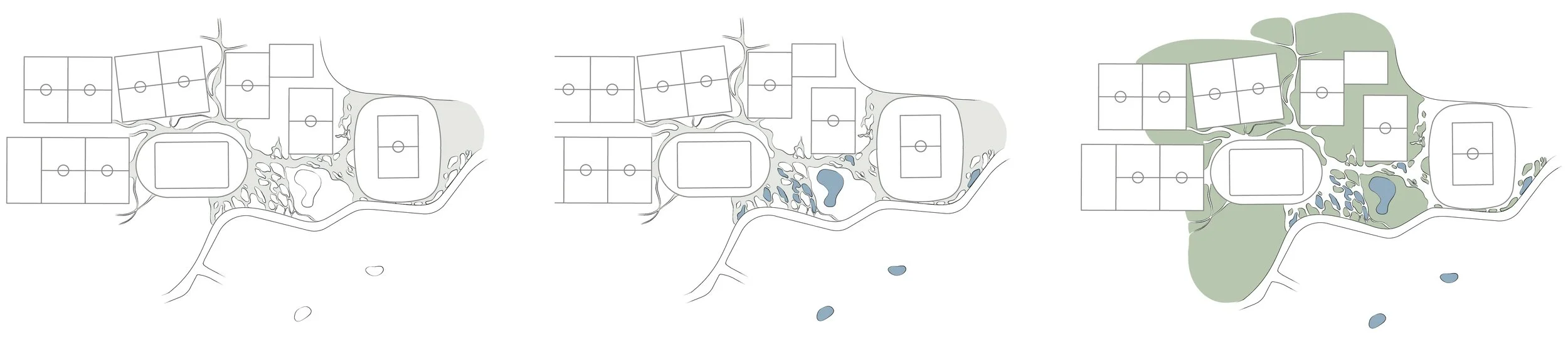
Inspired by the ice age meltwater plain, with larger and smaller branched meltwater channels, the sports complex's recreational infrastructure is established as a flowing and branched routes.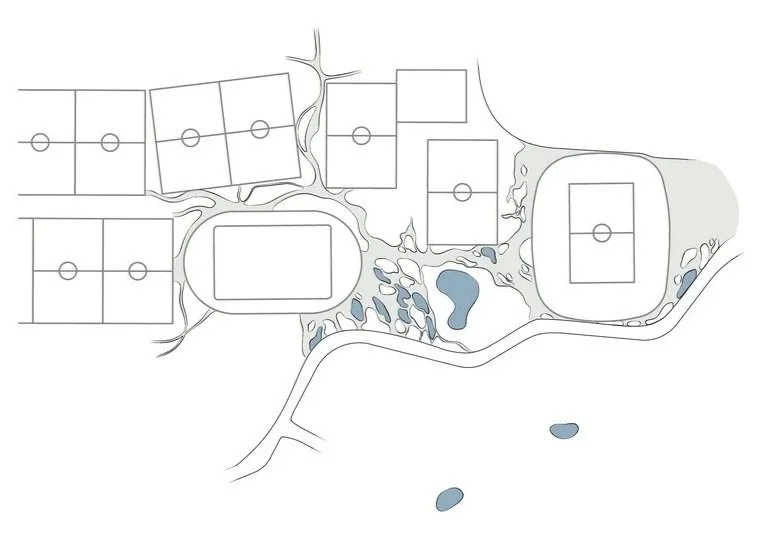
In the sports complex, landscape depressions appear as wetlands and rain beds and are part of the history of the area's characteristic 'dead ice holes' that characterize the nearby landscape. 'Dead ice holes' (dødishuller) were formed during Ice Age by a piece of ice that pressed a depression into the surface, before melting and filling it with water.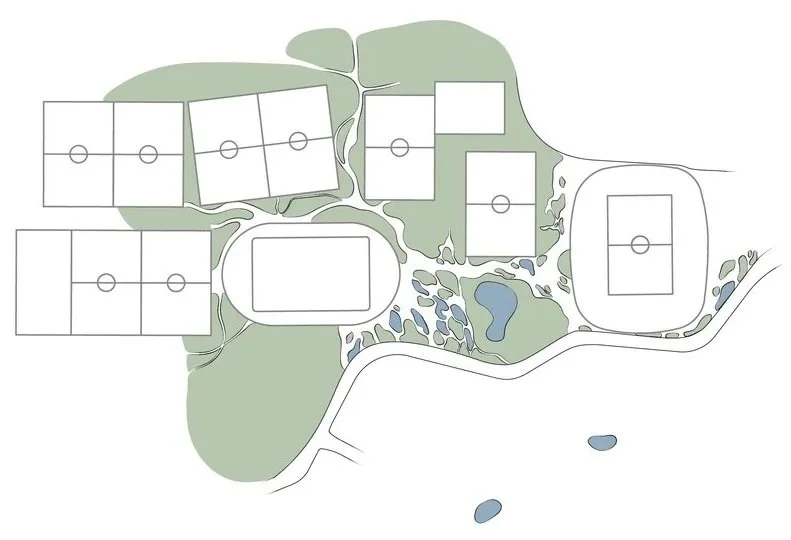
Shaping the space with green landforms; large and small hill formations rise around courses and gathering areas, echoing the 'dead ice hills' left on the moraine plain thousands of years ago by sediments from Ice Age meltwater lakes.