Place: Fanø, Denmark
Team: MASU Planning (Main advisor / Landscape architect), Everyday Studio
Client: Municipality of Fanø
Size: 25,000 m2 (planning area) / 5,100 m2 (project area)
Timeline: 2016-2017
Fanø Bad
Reminisces of a historic brick promenade was the starting point of the revitalizing of Fanø Bad.
With a small budget, you may not be able to transform everything at once, but by making a few well-informed changes, you can set the direction for the future. Fanø Bad has a glamorous past of coastal tourism by the sublime Wadden Sea. However, since the unique feel of the town faded, a long-term strategy and a new town square has initiated its revitalisation.
A long-term development strategy as key to a new identity.
Our development strategy addresses the problems we experienced at Fanø Bad – cars and car parking were put before people, a broad road allowed people to drive too fast and the few businesses had turned inwards, hiding behind fences to avoid the cars in the street. It was a shame in a town whose main attraction is the experience of walking from the town into the landscape.
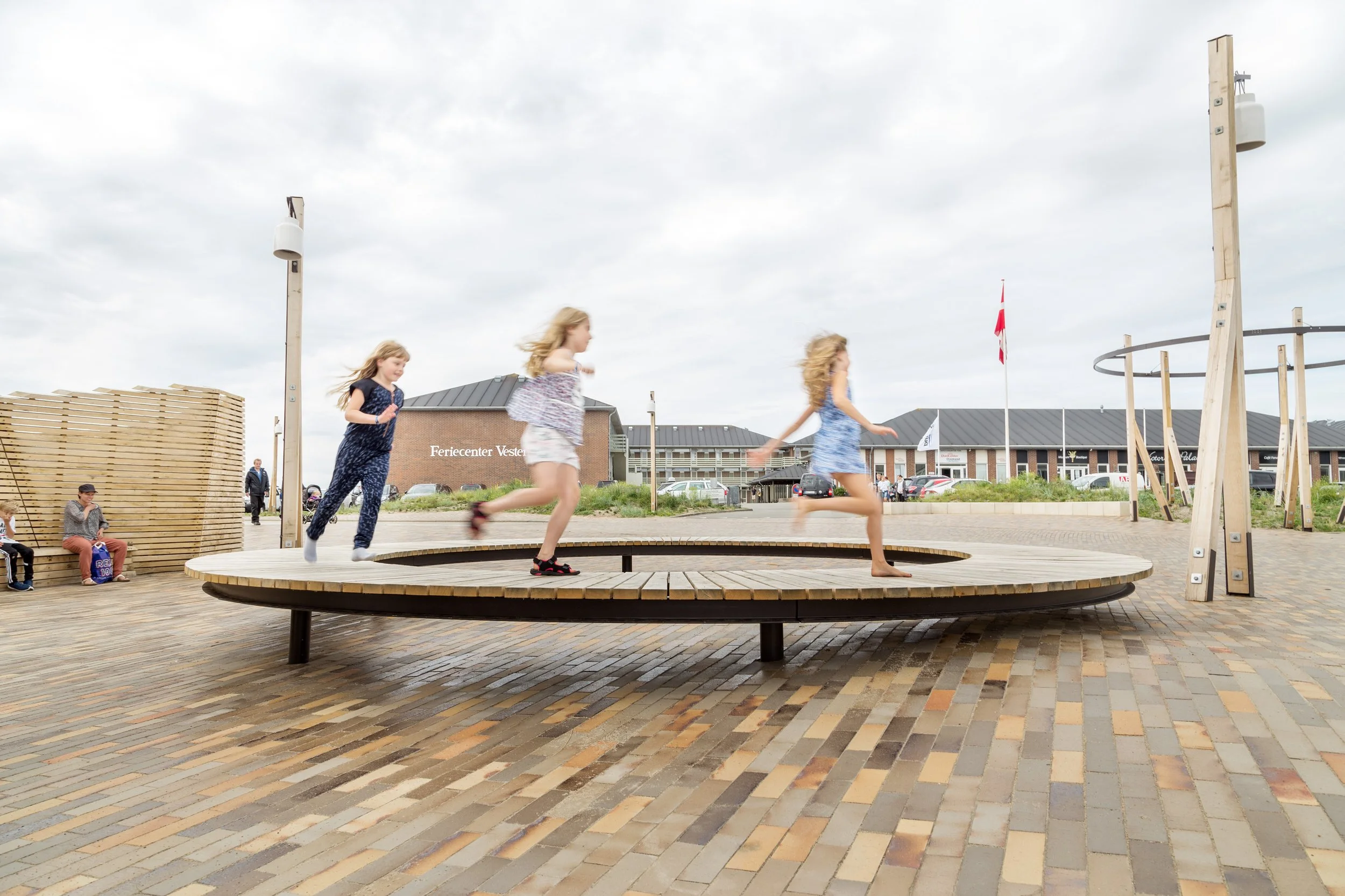
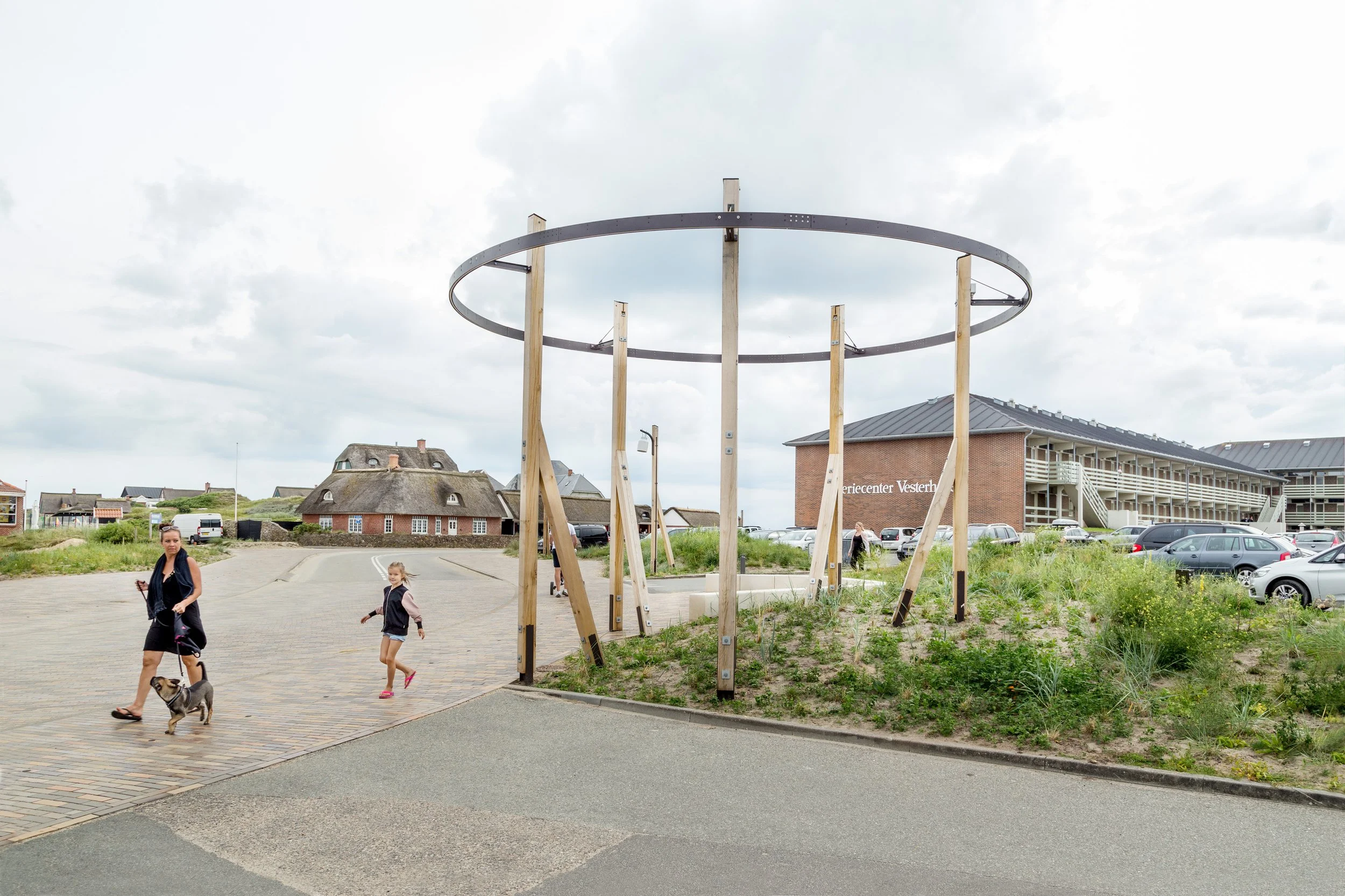
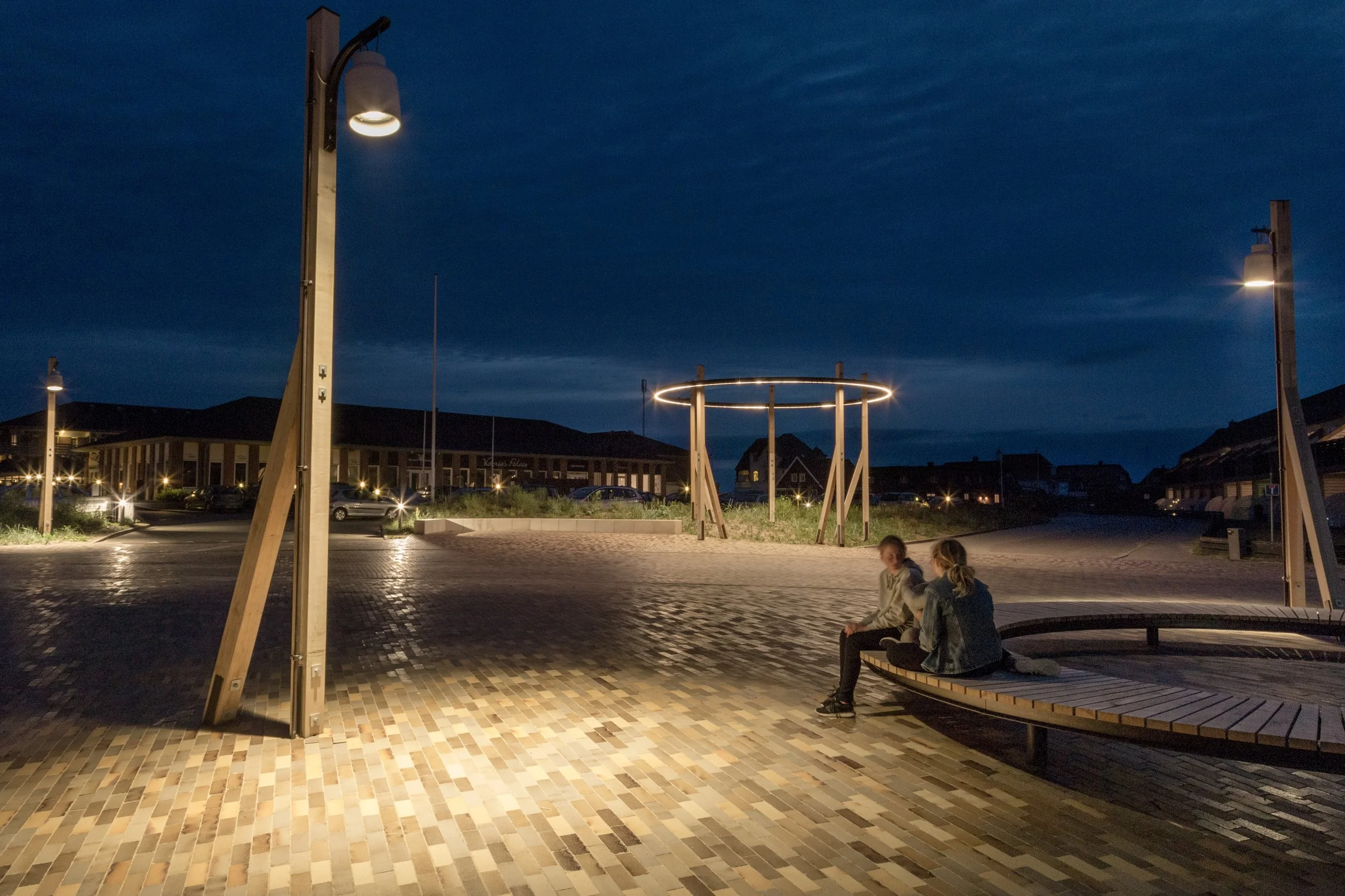
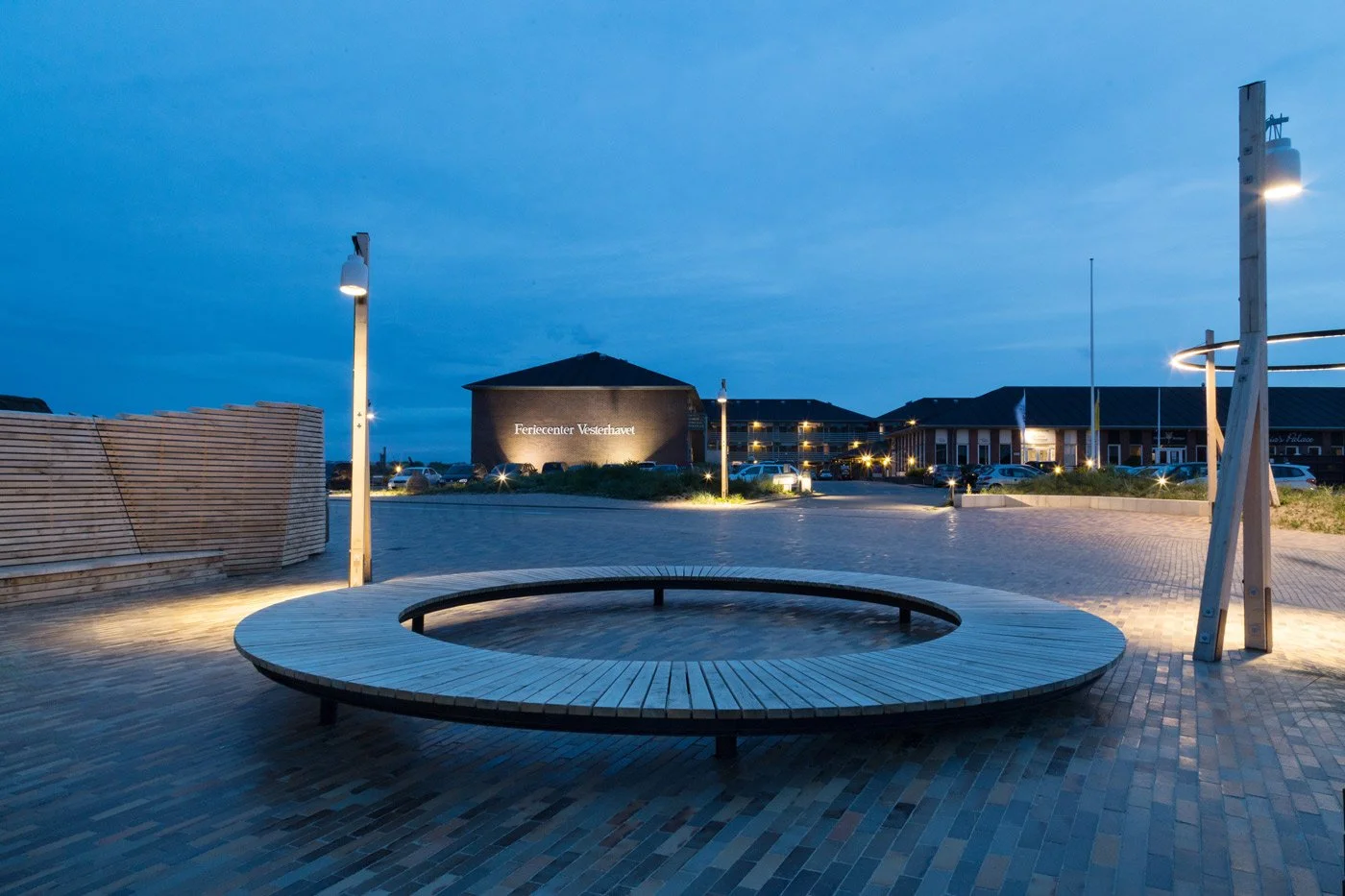
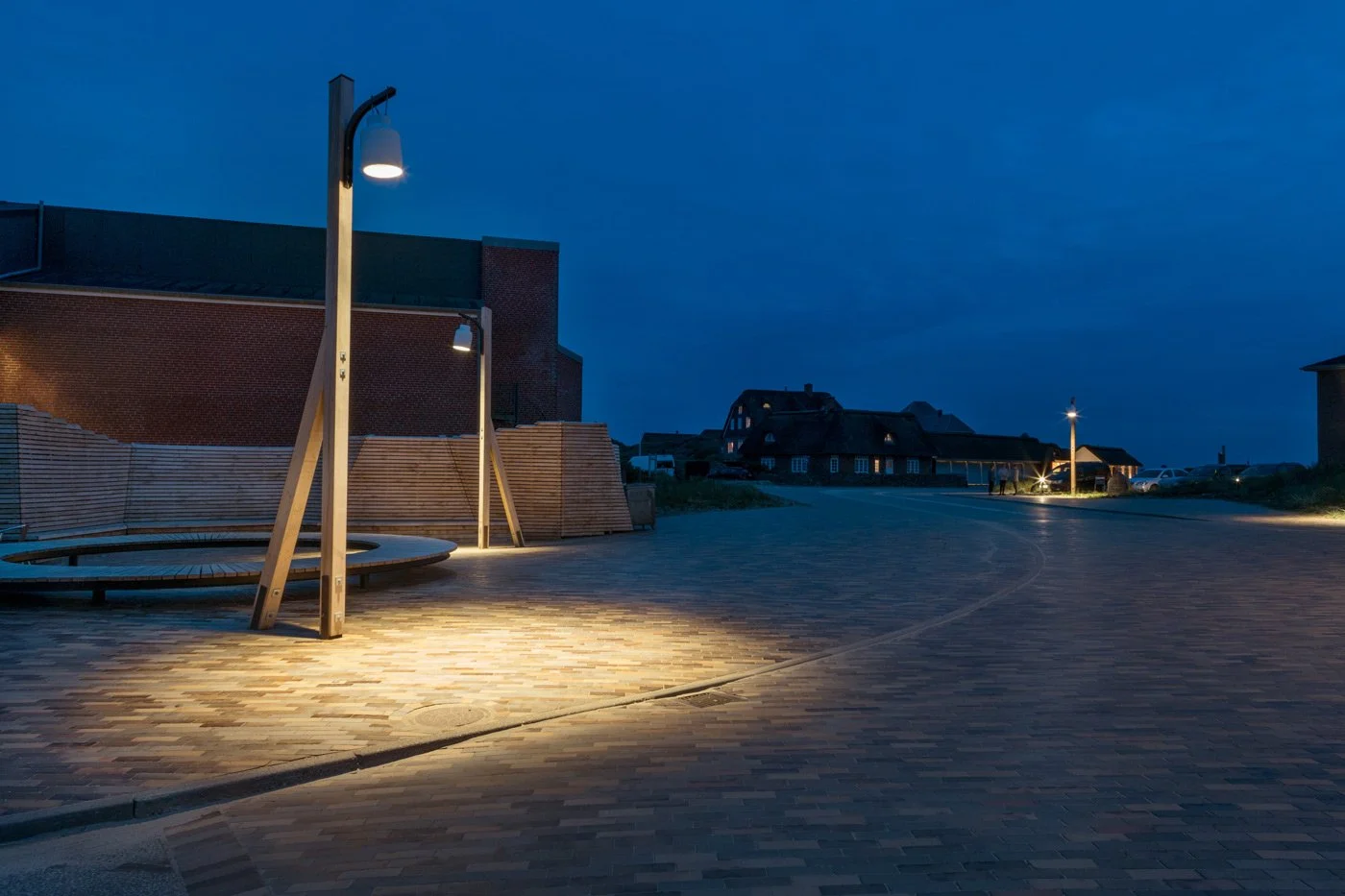
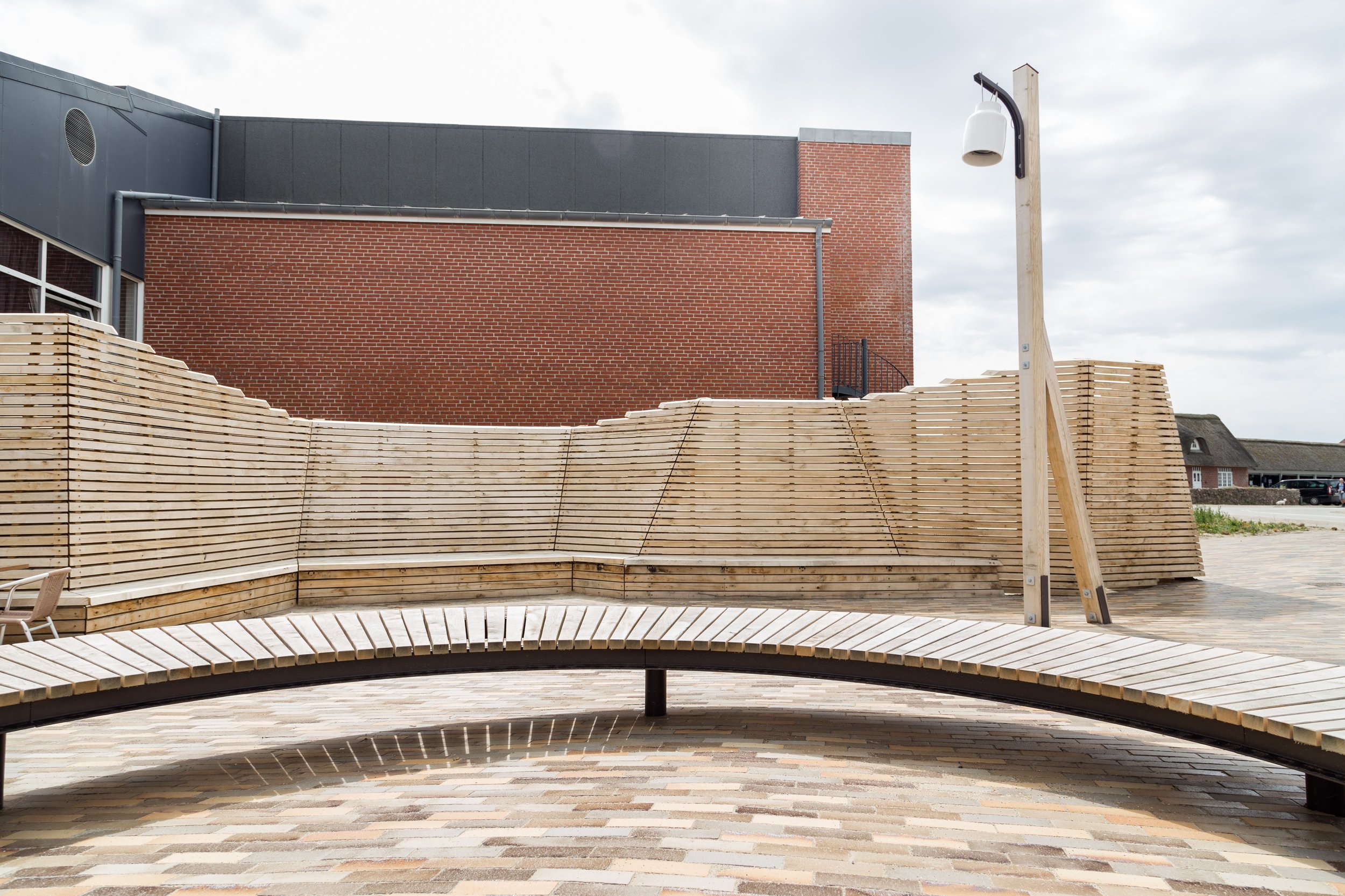
The new project consists of only a few elements inspired by history and local traditions: A new town ‘floor’ changing the hierarchy between people and cars, oak seating and lighting to establish a smaller scale sheltered gathering place and new vegetation to bring nature and the town closer.
The locals have ownership, the strategy is working
With a small budget, the focus was to establish a structure that could grow over time. Already-existing important and enthusiastic cultural and commercial stakeholders were approached and played a crucial part for the tranformation. We interviewed them, looking for potential in their businesses and everyday lives to include the public realm around them.
The limited resources were put into developing a main urban space that would create ripples in the development around it – and that is exactly what happened. The structural spine of the project is growing and the strategy has become a successful approach.
The surrounding businesses opened their façades towards the square and the change has brought a new atmosphere of hope and inspiration to Fanø Bad. Locals now improve their façades, continuing the promenade in similar pavement and taking new initiatives.
Sustainability through quality materials & flexible design
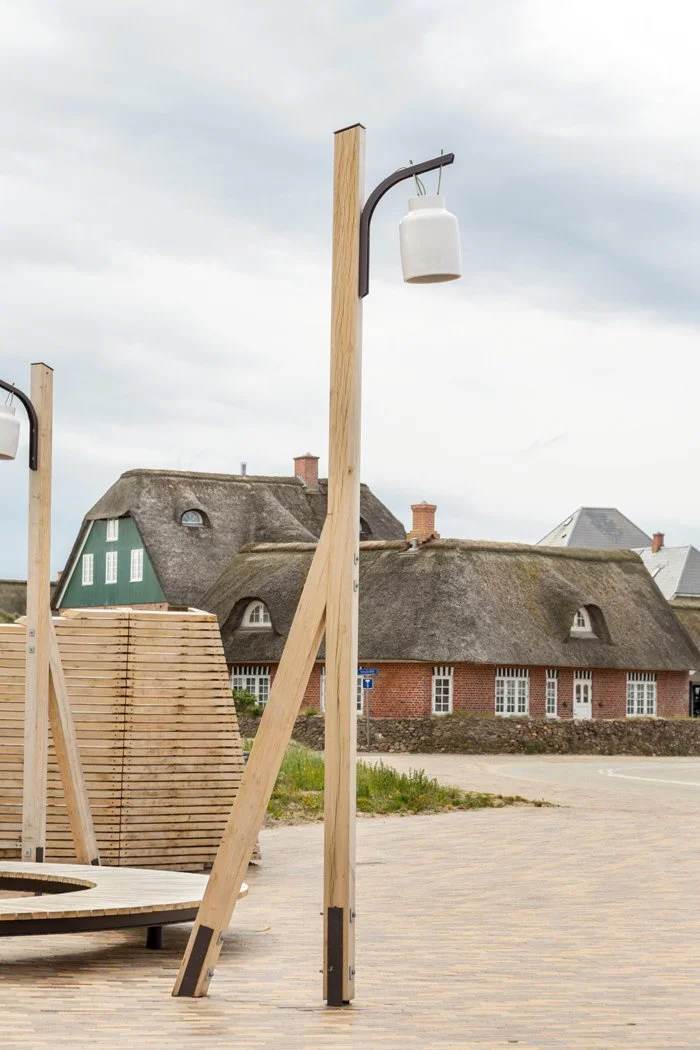
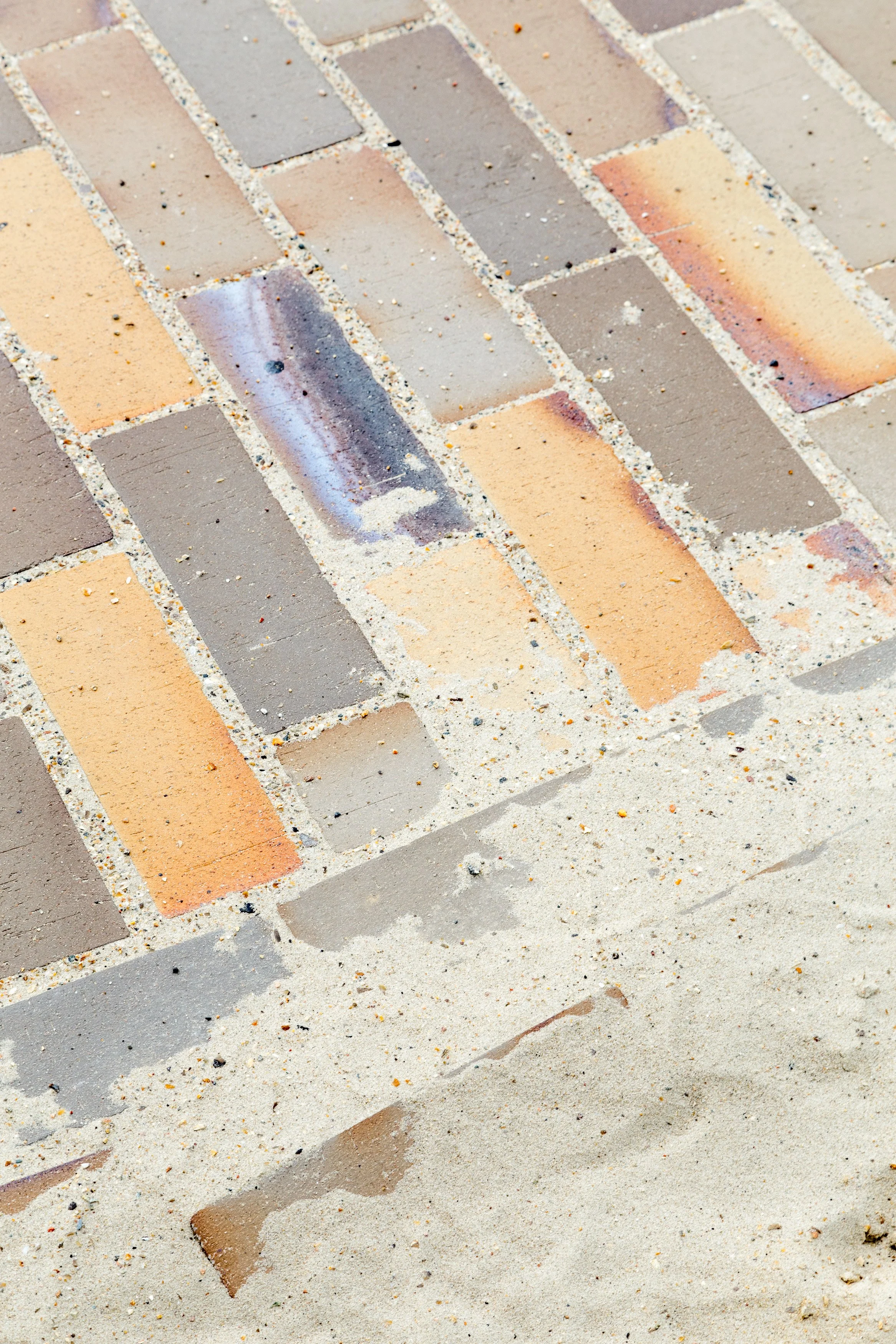
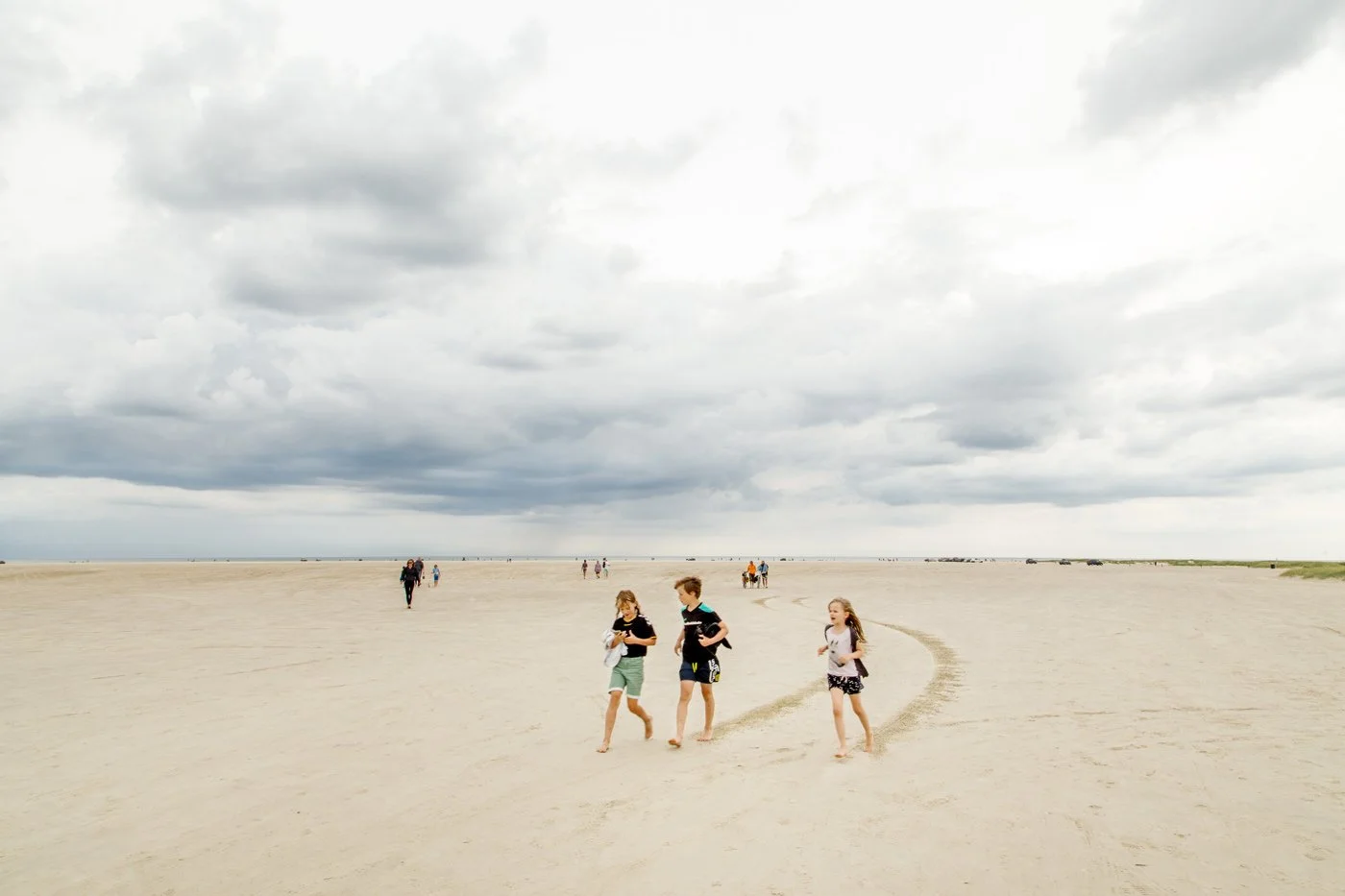
Brick pavement, oak furniture and ceramic lighting are durable materials that reflect the nature of Fanø. The brick paving is a natural fit in this site because the colour scheme sprang from the surroundings. The coal-burnt bricks simulate the light on the beach when the tide is low and the light yellow and grey bricks resemble the sand and seashells.
The materials will age beautifully and withstand the sand and rough wind of the west coast. The woodwork was created in collaboration with locals to promote local ownership of the site and make local knowledge and tradition visible. Along with high-quality materials, this has set a new standard for the town centre.
The forgotten history of the promenade culture
The first bath resort in Denmark was opened in Fanø in the 1890s and became a destination for the upper classes of Denmark, Germany and Austria. The main attraction weren’t the broad beaches, the light or the fresh air, but to see others and to be seen strolling up and down the promenade.
To create a stronger urban feeling, the city is divided into two main parts: one that is dentisified to set the centre stage for urban life and the other part that integrates the surrounding landscape, inspired by the historical beach houses and creating an atmosphere and sense of place.
To increase road safety, traffic speed is reduced and Strandvejen is transformed into an urban street used for promenading, and at the same time conncenting the many paths that tie Fanø Bad and the surrounding landscape together.
The local businesses and new town façades open up towards the street, creating an exchange of activities and urban life making the promenade an interesting place to be in.